
Seven Tough CEO Questions – Telco 2.0 Update
We’ve identified seven questions that are fundamental to telcos’ forward success, and compiled some of our recent research that helps address them.
Defining the future telco — and what it means for operators and their partners
We’ve identified seven questions that are fundamental to telcos’ forward success, and compiled some of our recent research that helps address them.

STL Partners published the inaugural version of our Digital Investment Database in early July, and we’ve now issued our first update, including a brief overview of Softbank’s acquisition of ARM and Verizon’s purchases of Yahoo! and Fleetmatics.

Dialog Axiata in Sri Lanka has developed a fast growing API platform that engages developers significantly more than plays by big telcos like AT&T, Orange and Vodafone relative to its scale. How has it achieved this and driven monetisation, innovation and efficiency within the company? And what is next?

STL Partners explores in detail how thirteen leading operators are addressing NFV and SDN. By exploring each management team’s vision for the technology and the current implementation activities, we have been able to identify six segments – from dynamic ‘NFV Business Model Transformation Pioneers’ to more prosaic ‘Utilitarian Adopters’. The report also outlines three major ‘best-practice’ recommendations for other players.

This report explores how Net Neutrality legislation has evolved significantly, looking at the general shape and specifics in the EU, US, India, Brazil and other territories. In general telcos can differentiate some aspects of broadband access with pricing or “specialized services”, but Internet app-blocking or paid-priority are disallowed. While legal challenges are ongoing, the way ahead seems much clearer, and we explore how telcos should focus on and enable interesting non-Internet connectivity opportunities around 5G, NFV and IoT.

Although the shape of the cloud industry turned out better than expected, most telco strategies in the cloud haven’t delivered. We investigate why, what has led to success, and what telcos need to learn to do differently.

M&A and majority investment are key tools in building digital businesses. But are telcos actively investing? We look in detail at SingTel, Telstra and Verizon, which have committed significantly to digital investment to extend their businesses. We also discuss why most European operators lag their Asia-Pac and North American peers. Our analysis is based on the newly-developed STL Partners Digital Investment Database, which tracks investments by 22 leading service providers.

The UK’s vote to leave the European Union came as a shock to many, and has complex ongoing consequences. We summarise briefly what happened, possible scenarios, and give our initial view on the implications for telcos, their business partners and the innovation ecosystem.

Mobile messaging is fast becoming a key platform for digital commerce, mounting a challenge to Google Search, Amazon’s Marketplace and other two-sided platforms. As Facebook gears up to take advantage of this opportunity, some of the world’s largest telcos are working with Google to develop and deploy multimedia communications services that will work across networks and will replace SMS. But will it be too little, too late?

We see early-warning signs of new changes afoot in the influential US mobile market in both growth and competitive market dynamics. Verizon Wireless was the biggest winner from the market’s recent growth. But now things are slowing and challenger T-Mobile is breaking into the premium segment. What are the lessons?

Software-Defined Wide Area Networks (SD-WANs) have catapulted to prominence in the enterprise networking world in the last 12 months, driven by the growth of demand for access to cloud applications, and businesses’ desire to control WAN costs and complexity. SD-WAN may be a new “intermediary” layer in the network which has the potential to disrupt telcos’ enterprise aspirations, particularly given that it is dominated by vendors and specialist providers rather than telcos. SD-WAN may reduce operators’ MPLS and WAN services revenues and could potentially restrict future NFV/SDN opportunities. But SD-WAN also offers opportunities, where it is embraced – tactically – as part of operators’ enterprise portfolios.

Our latest analysis identifies seven key barriers that have slowed NFV roll out across six operators (Deutsche Telekom, NTT, Verizon, Vodafone, Swisscom and Comcast), and the approaches being used to overcome them.

We analyse the aggressive strategy Telstra has chosen to develop its digital healthcare business – which relies heavily on acquisitions across the whole eHealth value chain – and discuss how this fits into a wider companywide digital strategy, what it will take for Telstra to succeed in this vertical, and what insights other telcos can take away about their own digital health strategies.

The spread of 3G and 4G mobile networks in Africa and developing Asia, together with the growing adoption of low cost smartphones, is helping Facebook, YouTube, Netflix and other global online entertainment platforms gain traction in emerging markets. But some major international telcos, such as Vodafone and MTN, also have well-established and multi-faceted online entertainment offerings in Africa and developing Asia. How robust are these telcos’ entertainment services? Can they fend off the mounting challenge from global Internet players? What is working for Vodafone India and MTN and what needs a rethink?

Becoming a Telco Cloud Service Provider (TCSP) is a new vision for the future of telecoms operators, which promises hugely improved agility, a fundamentally new business model, new services, and new growth. What is this vision, how would it work, and how can it overcome the barriers to change that have thwarted most previous efforts?
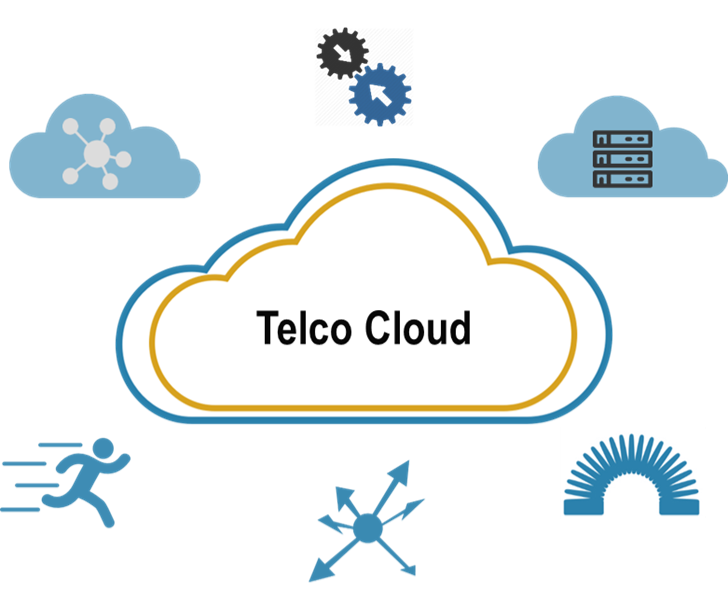
To date, discussions of the benefits to telcos of NFV and SDN have mainly focused on reducing operating and capital costs, while the impact on future telco revenues has been somewhat sketchy. In order to fill this gap, this report outlines a comprehensive set of potential new “telco cloud” services, and forecasts associated revenue growth.

For the first time, STL Partners quantifies the customer ‘app experience’ on twenty-seven mobile networks in seven countries. MobiNEX – The Mobile Network Experience Index – benchmarks mobile operators’ network speed and reliability by measuring download speed; average latency; error rate and latency consistency. It’s based on billions of real customer data points provided by our partners Apteligent. Congratulations to the top three performers – Bouygues, Free and Orange (all in France).
Our research focuses on how telcos and their partners can embrace industry disruption.
Learn more1