
Seven Tough CEO Questions – Telco 2.0 Update
We’ve identified seven questions that are fundamental to telcos’ forward success, and compiled some of our recent research that helps address them.

Although the shape of the cloud industry turned out better than expected, most telco strategies in the cloud haven’t delivered. We investigate why, what has led to success, and what telcos need to learn to do differently.

We analyse the aggressive strategy Telstra has chosen to develop its digital healthcare business – which relies heavily on acquisitions across the whole eHealth value chain – and discuss how this fits into a wider companywide digital strategy, what it will take for Telstra to succeed in this vertical, and what insights other telcos can take away about their own digital health strategies.

Becoming a Telco Cloud Service Provider (TCSP) is a new vision for the future of telecoms operators, which promises hugely improved agility, a fundamentally new business model, new services, and new growth. What is this vision, how would it work, and how can it overcome the barriers to change that have thwarted most previous efforts?
The last few years have seen attempts by many leading telecoms operators to refresh their business model and generate new sources of growth and value. Now many digital initiatives are being scaled back. Telefonica and Telenor, two companies in the vanguard of the ‘drive to digital’ have both disbanded their digital organisations. In the first of two reports, STL Partners explores why efforts to yoke platform and product innovation businesses to a traditional infrastructure business have proved so difficult. The financial and operational constraints associated with traditional telecoms – particularly the need for long investment cycles in ‘one-function’ infrastructure – have made achieving the switch to ‘agile digital innovation’ all but impossible. But all that may be about to change and the future could be a little brighter.

Widespread use of open source software is an important enabler of agility and innovation in many of the world’s leading internet and IT players. Yet while many telcos say they crave agility, only a minority use open source to best effect. We examine the barriers and drivers, and outline six steps for telcos to safely embrace this key enabler of transformation and innovation.

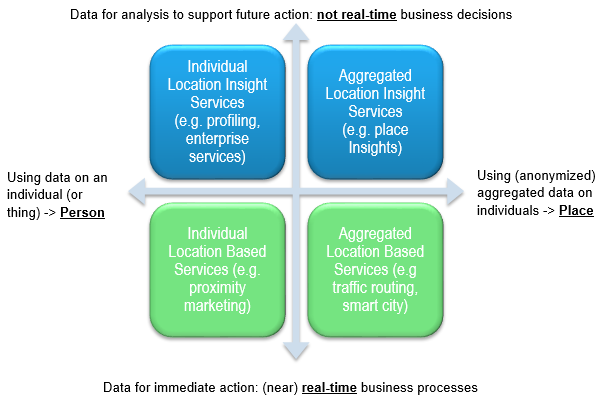
Drawing insight from the experience of early adopters (including Telefonica, Singtel and DTAG) and exploring the technology options available to operators, we show how operators can best use their distinct advantage over other players in the $5bn location insights marketplace. (October 2015, Foundation 2.0, Executive Briefing Service.)

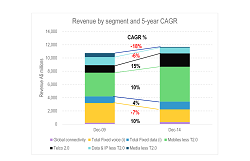
We believe that the global telecoms market is approaching a critical moment of change, as strategic drivers and enablers are combining to open the door to a fundamental shift in the industry. We show how and why with highlights of our recent research, and set the scene for a new vision for Telco 2.0 – what telcos should be in the future, and how to get there.

When Amazon Web Services (AWS) landed in Australia in 2012, everyone expected carnage for Australian carriers. Telstra’s Network Applications & Services division, though, is growing fast and making some interesting moves. How did Telstra do it, and what else can be learned from its successes and its latest moves into the Healthcare market?

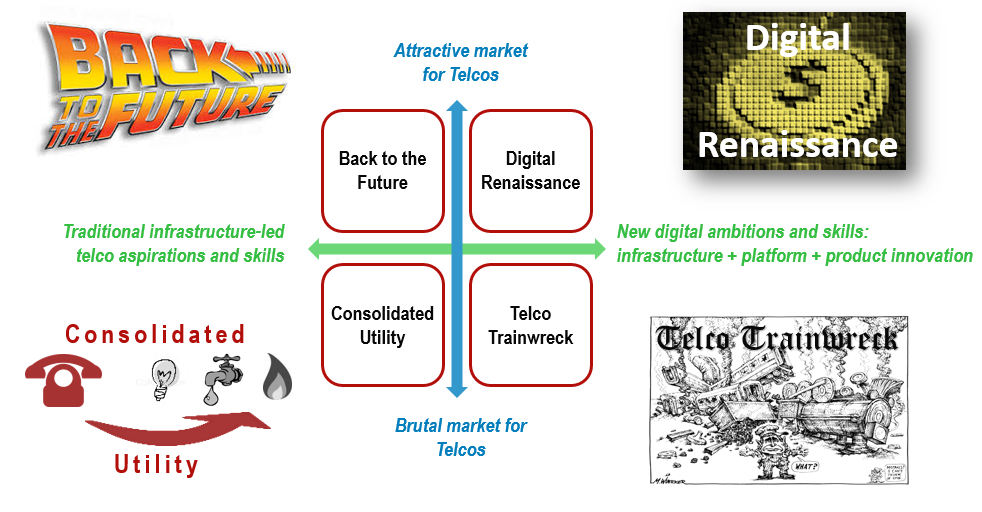
Seven predictions and four scenarios for how the industry might play out in Europe in the next 5 years: ‘Digital Renaissance’, ‘Back to the Future’, ‘Commoditised Utility’ and ‘Telco Trainwreck’. Plus what are the take-outs for other markets?

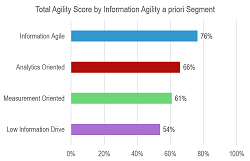
How agile are telcos today, what are the barriers and opportunities, and what can be done to improve agility? We look in depth at the findings from the Telco 2.0 Agility Challenge, and identify some key steps for telcos and partners to take, including specific organisational strategies to be ‘Agile by Design’ and the need for an ‘information intensive’ culture.

A primary benefit envisaged of 5G networks is that latency (i.e. delay times for users) will be massively reduced. This would deliver major benefits for many applications providing that the software for those cloud-based applications is located near enough to the users at the edge of the network. This is likely to drive a massive change in the architecture of the cloud and the network industries. This report outlines likely scenarios and identifies some early moves that are starting to play out now.

What is ‘agility’ and what makes it meaningful to operators? We explored the concept and characteristics of ‘operator agility’ through 29 interviews with telco senior executives, found three main barriers and five key opportunity areas, and identified some surprising and important conclusions about both what it means and the key steps needed to achieve it.

How will getting into the MVNO business help Google shore up its business model? We examine Google’s objectives, how it could price the service, and the implications for telcos and other players.

Facebook has changed substantially since we first analysed the company in 2011. In our latest major report we explore the accuracy of our 2011 predictions regarding users, revenue and strategy. We also examine Facebook’s current aspirations and challenges and explain why, where and how operators should be working with Facebook to build value.
Digital initiatives are an important part of the telecoms growth story. However, because they are so different to the traditional telecoms business, they require different performance metrics: a digital dashboard. In this report, we examine the importance of metrics in shaping business performance, explore the contribution of metrics to 3 telco digital success stories, and reveal how a cutting-edge approach to metrics is driving digital execution at Telkom Indonesia.

STL Partners’ industry transformation analysis, including a recent global survey of telco executives, suggests operators’ digital ambitions are rising fast but, given 9 substantial implementation challenges, too little is currently being done to engender successful industry-wide business model transformation. We also look at the lessons from NTT DoCoMo, one of the operators that has made the most overall progress towards a ‘digital’ model.