
Download PDF


As always, this list includes a range of companies, from start-ups to those established in the ecosystem. This year, we have categorised companies according to their primary role within the edge ecosystem, providing a clear view of how different players contribute to enabling edge capabilities.
Facility
This category includes the physical site including the land, the facility shell, power and cooling and additional services.
1. blocz IO
Company type: Start-up
Key proposition: Designs and builds edge data centres by repurposing existing buildings, with a focus on increasing edge capacity and improving sustainability.
Main customers: Telecoms operators, logistics organisations, utilities organisations, large enterprises in the AI sector, public sector organisations.
Notable achievements in 2025: blocz IO built partnerships with telecoms, logistics and utilities organisations to design and commercialise edge data centres within existing real estate assets. blocz IO reported helping two telecoms partners repurpose buildings previously used for analogue equipment into edge data centres and progressed plans to repurpose more than 20 buildings as edge locations. The company also worked on multiple edge data centre projects in the USA and EU and refined sustainable edge cooling solutions, reporting reductions in energy consumption compared with traditional air cooled deployments.
Product development roadmap for 2026: blocz IO plans further refinement of edge solutions that reduce energy consumption compared with traditional air cooled deployments, including improvements in manufacturing processes and integration of processor based power management. blocz IO also plans to develop blockchain based validation of carbon credits by linking renewable energy generated by a specific solar panel or turbine to energy consumed by a specific processor core. A prototype has been mapped and blockchain coding is scheduled for 2026.
2. DartPoints
Company type: Growth stage
Key proposition: Provides enterprise-scale edge data centres in regional markets to support AI, HPC and hybrid cloud workloads.
Main customers: Large enterprises, HPC users, AI customers, neocloud providers, telecoms operators.
Notable achievements in 2025: DartPoints secured new capital investment and expanded multiple regional data centre campuses. It increased power capacity in key markets and enhanced support for high-density workloads. It also strengthened ecosystem partnerships to improve hybrid cloud connectivity and private cloud integration. Its strategy focused on delivering enterprise-scale capacity in tier II and III markets.
Product development roadmap for 2026: DartPoints plans to expand existing campuses and optimise facilities for AI inference and regional compute workloads. It will continue enhancing high-density cooling capabilities and strengthening enterprise ecosystem partnerships. The company also intends to pursue selective acquisitions to expand capacity in regional markets where demand for AI-ready infrastructure is increasing.
3. ECL
Company type: Growth stage
Key proposition: Provides modular, grid-independent AI data centre infrastructure designed to support high-density workloads in power-constrained and distributed locations.
Main customers: AI infrastructure providers, cloud service providers, enterprises, data centre operators.
Notable achievements in 2025: ECL deployed production-grade NVIDIA GB300 NVL72 systems within its Mountain View facility, powered entirely by on-site hydrogen. The deployment demonstrated support for high-density, liquid-cooled AI workloads without reliance on traditional grid infrastructure. The site integrated hydrogen fuel cell power with direct-to-chip cooling and recirculated water systems. Following the successful deployment, its AI partner expanded its footprint, validating readiness for production-scale AI workloads in constrained environments.
Product development roadmap for 2026: ECL plans to expand its modular AI infrastructure platform across larger campuses and distributed deployments. It will progress development of large-scale hydrogen-powered sites and introduce a fuel-agnostic power platform intended for grid-constrained edge and regional environments. International expansion is planned, targeting regions where power, land and permitting limitations restrict traditional data centre development. The roadmap focuses on enabling scalable AI capacity in locations closer to demand.
4. Indosat Ooredoo Hutchinson
Company type: Established
Key proposition: Provider of AI factory and edge computing infrastructure (a channel partner for on-premise edge and operator of multiple network edge data centres) enabling enterprises and public sector organisations to deploy AI in the optimal compute environment.
Main customers: Healthcare, smart cities/public sector, financial services, manufacturing, mining, energy and utilities, telecommunications, digital startups and ISVs.
Notable achievements in 2025: Indosat Ooredoo Hutchison advanced its national AI and edge compute strategy through partnerships with BDx, Lintasarta and Nvidia, deploying a two-tier infrastructure model that combines renewable-powered AI campuses, including its CGK4 campus, with a wide footprint of network edge data centres. The company integrated Sahabat AI’s Bahasa Indonesia-adapted open-source LLMs into its AI compute fabric, partnered with Google Cloud to offer air-gapped Google Distributed Cloud for highly data-sensitive verticals, and established an AI-RAN research centre in Nvidia. Indosat’s strategy is designed to build a comprehensive compute portfolio across the edge-cloud continuum.
Product development roadmap for 2026: Indosat’s roadmap is expected to focus on scaling its AI factory capacity, expanding its network edge compute footprint, launching its first AI-RAN site, and further positioning itself as Indonesia’s primary in-country AI compute partner for enterprises and public sector organisations.
5. nLighten
Company type: Growth stage
Key proposition: A digital infrastructure platform which operates edge data centers distributed across several European economic hubs, focusing on enabling low latency network access for industry, private users and the mobile workforce.
Main customers: Mid-market enterprises, hyperscalers, AI companies, and platform players.
Notable achievements in 2025: nLighten expanded its UK edge footprint through deployments with customers including DCENT, Conscious Solutions and Grid Factory, demonstrating scalable, low-latency edge use cases. It launched the nAlliance partner programme to grow its ecosystem and formed a strategic partnership with Megaport to enhance software-defined connectivity. The company introduced the nConnect platform for centralised edge management and secured a renewable energy agreement with Conrad Energy. nLighten also achieved its first ICFN sustainability scores, reinforcing its focus on transparent, energy-efficient edge operations.
Product development roadmap for 2026: nLighten will focus on enhancing its edge platform to meet growing enterprise demand for secure, low-latency solutions. Priorities include AI-driven automation and improved multi-site management within its EdgeX platform, alongside expanded nConnect capabilities such as predictive monitoring and anomaly detection. The company also plans to launch a managed Edge-as-a-Service offering to simplify enterprise adoption. It will also introduce energy optimisation and sustainability tools for real-time visibility across edge sites, while expanding its nAlliance ecosystem to strengthen interoperability and regional reach.
6. Pulsant
Company type: Established
Key proposition: Provides hybrid cloud, colocation and edge computing services for UK organisations that require resilient infrastructure and local connectivity.
Main customers: UK based organisations in financial, legal, healthcare and technology sectors.
Notable achievements in 2025: Pulsant expanded its UK edge data centre footprint and strengthened financing. The company completed the acquisition of SCC’s Birmingham and Fareham data centres, taking its platformEDGE estate to 14 sites and adding several megawatts of regional capacity. It also secured a five‑year refinancing package, increasing total debt facilities to £187 million to support further regional growth, acquisitions, and investment in its network and hybrid cloud services.
Product development roadmap for 2026: Pulsant’s 2026 roadmap centres on expanding regional edge capacity and supporting cloud repatriation and data sovereignty needs. The company plans further investment in edge data centres near major UK cities, targeting industries such as smart manufacturing, transport, and other latency‑sensitive sectors. Its strategy emphasises resilient, sustainable, and regionally balanced infrastructure delivered through platformEDGE, enabling organisations to keep workloads closer to users while maintaining compliance with evolving UK and European regulations.
7. Telefónica
Company type: Established
Key proposition: Provides sovereign edge computing integrated with 5G networks to support low-latency enterprise applications.
Main customers: Enterprises, technology partners.
Notable achievements in 2025: Telefónica deployed Cloud Edge Nodes in 10 locations across Spain under the IPCEI-CIS programme, entering a pre-commercial phase with selected customers ahead of full commercial launch in H1 2026. The offer integrates 5G, GSMA Open Gateway capabilities, AI-as-a-Service, sovereign guarantees and intelligent edge application deployment. Telefónica also delivered an MVP with CAF on a live network in Bilbao, deploying dedicated low-latency 5G connectivity integrated with its Edge Data Center to migrate computer vision workloads from trains to the edge. At European level, Telefónica partnered with DT, Vodafone, Orange and TIM to implement a first European Edge Federation.
Product development roadmap for 2026: Telefónica plans to expand its edge footprint to additional regions in Spain and enhance platform capabilities, including platform-as-a-service functionality. It will continue developing federation capabilities and integration with industry initiatives to support cross-border edge deployments and sovereign enterprise use cases.
8. Thermify
Company type: Start-up
Key proposition: Runs distributed edge compute in homes and recovers waste heat to provide domestic heating while monetising compute workloads.
Main customers: UK Power Networks SHIELD, social housing partners, households.
Notable achievements in 2025: Thermify progressed SHIELD HeatHub trial activity that uses distributed compute to provide domestic heating, with coverage across multiple outlets. Thermify supported pilot deployments with UK Power Networks SHIELD and social housing partners, with households as end customers. The work demonstrated waste heat recovery from in home compute as part of an approach to domestic heating provision.
Product development roadmap for 2026: Thermify expects continued productisation and deployment expansion linked to wider SHIELD rollout ambitions being assessed through the trial. The roadmap is framed as a multi year scale up plan, building on the pilots and trial activity progressed in 2025.
9.Vertiv
Company type: Established
Key proposition: Offers a portfolio of power, cooling, and IT infrastructure solutions and services that extends from the cloud to the edge of the network.
Main customers: Hyperscalers, enterprises (e.g. in healthcare, manufacturing, rail, power generation, and oil & gas), system integrators.
Notable achievements in 2025: Vertiv advanced its position in enabling edge AI infrastructure through product innovation, expanded services, and strategic acquisitions. It launched the Vertiv Liquid Cooling Services portfolio and introduced new high-density cooling solutions for edge environments, including wall-mount systems, rear door heat exchangers, and immersion cooling. Vertiv also demonstrated alignment with Nvidia’s 800VDC power architecture intiative, and provided reference architectures for edge AI deployments throughts its AI Hub. Acquisitions of Great Lakes Data Racks & Cabinets and Waylay expanded its AI infrastructure and orchestration capabilities.
Product development roadmap for 2026: Vertiv’s 2026 roadmap focuses on facilitating the deployment of AI across edge and high-density data centre environments. A key milestone is the launch of its 800 VDC power architecture portfolio, designed to improve efficiency and support megawatt-scale AI deployments. The company will further expand modular infrastructure systems such as Vertiv OneCore and SmartRun to accelerate deployment and increase flexibility. It will also focus on enhancing its digital tools and softwares, with a focus on enabling real time monitoring and infrastructure lifecycles.
Infrastructure
This category includes the hardware and virtualisation needed to run the edge applications.
10. Armada
Company type: Growth stage
Key proposition: Modular data centre provider delivering rugged, self-contained edge and AI infrastructure that brings secure, high-performance, cloud-like computing to remote and connectivity-constrained environments.
Main customers: Extractives, defence, government, manufacturing, telecommunications
Notable achievements in 2025: Armada expanded deployments of its modular edge AI data centres across industrial and remote locations, working with customers including Aramco and the US Navy. It deepened its ecosystem through partnerships with players across the value chain. This includes a partnership with OpenAI on developing domain-specific models suuitable for edge deployment, satellite connectivity providers such as Starlink, drone applications vendors such as Skydio and Tampnet to develop a join go-to-market for enterprises in the extractives sectors. Armada also broadened its product portfolio with launches such as Leviathan, a megawatt-scale modular data centre designed to provide high performance compute wherever power exists.
Product development roadmap for 2026: Armada is focused on scaling deployments of its modular data centres, including Leviathan units, into a diverse range of verticals. It plans to further expand its ability to support AI at the edge, this includes partnering with neoclouds, such as Nscale, in order to combine large-scale data centres with edge modules to support sovereign AI infrastructure for public sector and enterprise customers globally. Armada also intends to expand full-stack offerings that bundle modular data centres, high performance, software and flexible connectivity into repeatable deployment models.
11. Boldyn Networks
Company type: Established
Key proposition: Designs and operates private 4G/5G networks and neutral-host solutions that provide connectivity infrastructure supporting low-latency and high-capacity communications in enterprise, transport and large venue environments.
Main customers: Large enterprises in Germany in logistics and retail
Notable achievements in 2025: Boldyn Networks delivered its first remote control use cases with large logistics and rail companies Boldyn also agreed to acquire Smart Mobile Labs in Germany, was named a Leader in The Forrester Wave for private 5G services, Q4 2025, and published its 2025 sustainability update, reporting progress against climate and sustainability targets.
Product development roadmap for 2026: Boldyn Networks plans deeper integration of their product within customer IT environments and development of AI object recognition and AI model learning capabilities. Alongside this, Boldyn’s roadmap centres on organic growth in neutral host and private 5G, with continued integration of Smart Mobile Labs and further work to reduce the environmental footprint of digital infrastructure. Boldyn has also stated plans to scale private 5G as a service and shared infrastructure across transport, stadiums, campuses, and smart cities
12. Cyborg Network
Company type: Start-up
Key proposition: Provides distributed edge AI inference infrastructure delivering low-latency processing, data locality and predictable pricing across edge locations.
Main customers: Software vendors, AI-first start-ups, development teams, managed service providers, telecoms operators.
Notable achievements in 2025: Cyborg Network raised two rounds of grant funding (USD 318k) and fulfilled associated delivery requirements while launching its first product, Oxlo.ai. The platform secured more than 1,500 active users in over 75 countries within weeks of awarded as a top AI company by F6s platform. The year focused on validating demand for distributed inference services that reduce latency and improve cost predictability for AI-powered applications operating closer to end users.
Product development roadmap for 2026: Cyborg Network plans to expand Oxlo.ai into a more mature distributed inference platform with broader model support and improved performance guarantees. It will introduce enterprise-ready features including usage controls, service level commitments and enhanced security. In parallel, it intends to expand multi-region edge deployments and improve orchestration of GPU clusters, including tighter integration with partner-operated and telecoms operator edge environments to support production AI workloads.
13. Gcore
Company type: Growth stage
Key proposition: Software and infrastructure provider supporting cloud service providers, telcos and enterprises build and run private AI clouds and manage AI workloads reliably and efficiently across cloud, hybrid or on-premise environments.
Main customers: Cloud service providers, telecoms operators, large enterprises, finance, healthcare, manufacturing, gaming, media and technology sectors.
Notable achievements in 2025: Gcore launched its AI Cloud Stack solution, enabling cloud service providers, telcos and enterprises to build private AI clouds on Nvidia GPU clusters. It integrated partnerships with VAST Data and Nokia to support scalable, multi-tenant AI infrastructure deployment. Gcore also released Everywhere AI, a platform simplifying AI training and inference deployment across cloud, hybrid and on-premise environments. These product developments reflect its shift from CDN and security solutions to also establishing itself as GPU cloud provider and deployment partner for enterprise customers.
Product development roadmap for 2026: Roadmap centred on expanding adoption of its AI Cloud Stack for private AI cloud deployments with partners such as VAST Data and Nokia, scaling its hybrid and on-prem AI infrastructure capabilities; it is also expected to invest in broader edge compute and AI-enabled services as part of its global infrastructure expansion.
14. Green Edge Computing (GECCO)
Company type: Start-up
Key proposition: Offers compact, energy-efficient edge data centres with modular infrastructure, supporting AI, industrial automation, and telecoms applications in remote and urban environments.
Main customers: Industrial, retail, defence, utilities and telecoms operators.
Notable achievements in 2025: GECCO expanded its global partner network to 14 distributors and system integrators across 12 countries, and progressed several large distribution agreements. The company launched the GECCO EdgeCard Switch, a rugged 10Gbps Layer 2/3 switch/router designed to slot into its EdgePod – its ruggedised on-premise edge solution. GECCO also introduced a version of the EdgePod W31 targeted at industrial environmnets – this new solution is wall-mounted, IP66-rated version with integrated space for third-party IT, OT and IoT equipment. In parallel, it partnered with ISVs in edge AI, cybersecurity and industrial controls to deliver more integrated edge solutions.
Product development roadmap for 2026: GECCO’s roadmap centres on expanding its compute portfolio and scaling edge density. The company will continue developing more advanced EdgeCard microservers, working with Intel and NVIDIA to integrate next-generation chipsets with a focus on Edge AI inferencing. GECCO is also developing a ruggedised, shallow-depth rack-scale solution capable of hosting up to 200 EdgeCard server. This system is designed to bring higher-density, energy-efficient compute to edge locations that cannot accommodate traditional data centre infrastructure.
15. Groq
Company type: Growth stage
Key proposition: Provider of specialised AI inference hardware and cloud services that deliver faster, predictable and cost-efficient execution of AI models in cloud and on-premise environments – core to this is Groq’s Language Processing Unit, an Application-specific integrated circuit designed specifically for AI inference workloads.
Main customers: Cloud service providers, finance, public sector, AI software vendors.
Notable achievements in 2025: Groq expanded its global presence with new data centre deployments, featuring its Language Processing Unit (LPU), including a facility in Sydney for AI inference workloads. Groq formed a go-to-market and technology partnership with IBM, integrating its GroqCloud inference technology with IBM’s Watsonx Orchestrate offering. It also partnered with Paytm in India and Aljammaz Technologies across MENA to deliver real-time AI services, and became the exclusive inference provider for Bell Canada’s sovereign AI network. Notably, in December 2025 it entered a non-exclusive licensing deal with Nvidia worth about USD20 billion for Groq’s AI inference technology and key personnel.
Product development roadmap for 2026: Groq’s roadmap is expected to focus on expanding its global inference infrastructure, building on its deployments across North America, Europe and the Middle East and plans to open additional facilities to bring compute closer to customers. Following its non-exclusive licensing agreement with Nvidia for its inference technology, Groq is likely to prioritise integrating its LPU hardware and software stack into the Nvidia ecosystem.
16. KPN
Company type: Established
Key proposition: Its multi-cloud (Networking) and edge solutions help business customers address interoperability, security and compliance needs.
Main customers: Enterprises (e.g. in manufacturing, transport & logistics, retail & health), system integrators, ISVs.
Notable achievements in 2025: KPN launched its campus proposition, combining Private 5G, indoor localisation, LAN and edge infrastructure to support secure, ultra-reliable connectivity for mission- and business-critical use cases. KPN also developed KPN EdgeNL, a core edge service underpinning KPN Campus and available as a standalone offering. EdgeNL provides managed Windows, Ubuntu and Red Hat virtual machines on KPN-managed Dell NativeEdge hardware, enabling standardised, automated and centrally managed edge deployments across a range of enterprise use cases.
Product development roadmap for 2026: KPN will expand AI capabilities across both KPN Campus and its standalone EdgeNL service. Within KPN Campus, the focus will be on AI-driven operational technology (OT) use cases in partnership with Cordis. KPN will also advance edge-based SASE and CASB security services, including preparations for sovereign implementations. For EdgeNL, the roadmap centres on building an AI ecosystem supported by NVIDIA, Intel and AMD GPU-enabled Dell hardware, providing a scalable compute foundation for a broad range of enterprise AI workloads.
17. OnLogic
Company type: Growth stage
Key proposition: Provides purpose built industrial edge computers that are configurable and right sized for industrial and edge AI workloads.
Main customers: Manufacturers, software vendors, systems integrators, enterprises, public sector organisations.
Notable achievements in 2025: OnLogic expanded its portfolio to support industrial and AI edge deployments. OnLogic launched the Axial AX300 3U edge server and the fanless, AI ready Karbon 520 and Helix 520, featuring Intel Core Ultra processors. OnLogic expanded its partnership with Zededa and established a partnership with Viso.ai to support integrated edge AI and orchestration deployments. OnLogic also introduced AI consulting and cybersecurity consulting services to support secure deployment and scaling of complex edge projects.
Product development roadmap for 2026: OnLogic will expand its edge AI inference portfolio across more silicon architectures in 2026. The company intends to provide a more complete portfolio of right sized hardware options for different workloads. OnLogic aims to improve total cost of ownership for edge AI deployments and support a broader range of inference use cases across industrial and AI edge environments.
18. Scale Computing
Company type: Established
Key proposition: Edge infrastructure, networking, virtualisation and orchestration solution provider. Its virtualisation and orchestration capabilites are provided through the SC//Platform.
Main customers: Enterprises.
Notable achievements in 2025: Scale Computing’s acquisition by Acumera has expanded its capabilities from virtualisation and orchestration, into secure networking and managed edge services as well. In 2025, the company enhanced its SC//HyperCore platform with greater automation and self-healing capabilities, expanded partnerships with Lenovo, Veeam and Arrow, and advanced its Fleet Manager orchestration software. It also benefited from rising demand as a VMware alternative and growing adoption of its subscription-based Edge Computing as a Service (ECaaS) offering.
Product development roadmap for 2026: Scale Computing’s 2026 roadmap centres on advancing its edge platform, SC//Platform, including expanded AI capabilities and deeper integration of secure networking and managed services following its acquisition by Acumera. The company is expected to further enhance its virtualisation software – SC//HyperCore – and its Fleet Manager platform to better support large-scale, distributed environments, while continuing to expand its ecosystem partnerships. Its Edge Computing as a Service delivery model is also likely to remain a key strategic focus. Further details are expected to be announced at Platform//2026.
19. Solidigm
Company type: Established
Key proposition: Provides high-capacity NVMe storage designed to support data-intensive AI and analytics workloads across edge environments.
Main customers: Large enterprises and SaaS companies.
Notable achievements in 2025: Solidigm launched its E1.S D7-PS1010 NVMe SSD, designed for deployment in environments ranging from wearable and compact edge systems to containerised data centres. It collaborated with Nvidia on AI storage solutions and worked with partners supporting autonomous vehicles and mobile data centre deployments. The company also engaged with infrastructure, cooling and software ecosystem partners to validate storage performance in distributed and high-density AI environments where space, power and thermal constraints are key considerations.
Product development roadmap for 2026: Solidigm plans to expand its portfolio of high-capacity NVMe SSDs targeted at AI inference and distributed edge workloads. It will focus on improving storage performance for parallel data access and supporting higher rack densities in environments that increasingly adopt liquid and immersion cooling. The roadmap includes strengthening ecosystem validation with AI infrastructure partners to ensure storage platforms can support edge-to-core data flows and high-throughput AI processing requirements.
20. StonesThro
Company type: Start-up
Key proposition: Provides resilient UK sovereign micro-edge data centre capacity for low-latency, AI-ready workloads deployed within critical national infrastructure.
Main customers: Enterprises.
Notable achievements in 2025: StonesThro deployed three fully operational micro-edge sites within UK infrastructure environments. It established partnerships with Cornerstone and Zadara to support sovereign edge cloud deployment and progressed proof-of-concept environments into real-world operational settings. The company also became a member of open compute project (OCC), indicating engagement with broader infrastructure standards and communities.
Product development roadmap for 2026: StonesThro is focusing on scaling deployment to demonstrate a meshed edge cloud architecture that is AI-ready, UK-sovereign and designed for low-latency compute. A key objective is to expand the footprint of micro-edge sites to validate distributed operation at scale, while implementing N+2 (or N+3) resiliency to enhance redundancy and service continuity. The aim is to evidence that a geographically distributed, sovereign edge cloud can provide resilient, high-performance compute suitable for AI and latency-sensitive workloads across the UK.
Platform
This category focuses on software that enables an application to be spun up, updated and uninstalled on edge infrastructure.
21. AnyLog
Company type: Growth stage
Key proposition: Makes live edge data usable by AI through a decentralised edge data fabric that operates without cloud dependency or custom integration.
Main customers: Systems integrators.
Notable achievements in 2025: AnyLog integrated the AnyLog Edge Data Fabric with IBM Open Horizon and Dell NativeEdge to support deployment and management of decentralised edge data fabrics across enterprise and industrial environments. AnyLog also released an update introducing model context protocol server capabilities, allowing large language models and AI agents to query live edge data in real time without data centralisation. The company enabled real time analytics and automation at the edge through a zero code, decentralised architecture that supports AI driven decision making closer to operational environments.
Product development roadmap for 2026: AnyLog’s 2026 plans include extending the Edge Data Fabric beyond SQL and natural language queries by introducing a unified namespace that presents a structured, hierarchical view of edge data. This will allow applications, analytics and AI agents to discover, navigate and query distributed data through semantic and hierarchical relationships without data centralisation. AnyLog expects this to support more intuitive access to real time edge data and simplify development of edge native applications that rely on consistent context across distributed sources.
22. Arctos Labs
Company type: Start-up
Key proposition: Addresses the challenges of managing distributed IT systems across edge and cloud locations, helping clients reduce costs, enhance performance, and improve resilience in multi-cloud and hybrid IT environments.
Main customers: Service providers (telcos, edge, cloud), system integrators and software vendors (e.g. orchestration vendors).
Notable achievements in 2025: Arctos Labs expanded its multi-cloud and hybrid IT portfolio with new solutions focused on security, data centre optimisation, and load balancing, enhancing its capabilities to support distributed and enterprise infrastructure environments.
Product development roadmap for 2026: Arctos Labs plans to expand support for multi-cloud environments with enhanced energy optimisation and cost management features. The company will also deepen collaboration with existing partners, grow its ecosystem, and develop pre-integrated solutions to simplify deployment and integration of its platform.
23. Avassa
Company type: Growth stage
Key proposition: Enables secure remote update, monitoring and troubleshooting of edge applications and infrastructure at scale, including in environments with limited connectivity.
Main customers: Retail enterprises, industrial enterprises, machine builders, original equipment manufacturers.
Notable achievements in 2025: Avassa publicly referenced H and M as a flagship retail customer in 2025 alongside working with Fiftytwo.com and Extenda Retail as a point of sale provider. The company also presented with SECO Tools, part of the Sandvik Group, at SPS 2025, reflecting its focus on the industrial vertical. Avassa also achieved ISO IEC 27001 certification in May 2025. These milestones supported Avassa’s positioning in retail and industrial edge computing deployments and strengthened its security credentials for customers operating distributed environments.
Product development roadmap for 2026: Avassa plans enhanced support for complex network segmentation scenarios, including ISA 95 architectures, and improved support for long lived offline scenarios. Avassa also plans integrations to certificate automation standards to support automated certificate management. The roadmap includes enhanced virtual machine orchestration to support hybrid use cases, alongside continued development of remote operations capabilities for edge application updates, monitoring and troubleshooting across distributed sites where connectivity is not guaranteed.
24. Barbara
Company type: Growth stage
Key proposition: Delivers an edge AI orchestration platform for deploying and managing applications and AI in distributed industrial environments, ensuring security, scalability, and efficiency.
Main customers: System integrators, enterprises (in verticals such as utilities, manufacturing and energy).
Notable achievements in 2025: In 2025, Barbara focused on enhancing the performance and user experience of its edge orchestration platform, culminating in a major release featuring a new dashboard and map capability of the platform, designed to provide better visibility, real-time alerts, and simplified application management. The update also introduced enhanced permissions, multi-company support, global filtering, and instant auto-onboarding. In parallel, Barbara strengthened its partner ecosystem to provide customers with a more comprehensive, end-to-end solution for industrial environments.
Product development roadmap for 2026: In 2026, Barbara’s roadmap focuses on scalability, operational simplicity and support for mission-critical industrial use cases. Key initiatives include “Barbara Core” for Linux to expand deployment flexibility, “Hypervariables” to support the management of large-scale deployments, “Deployment Recipes” to enable mass deployment of complex workloads, and “Superprovisioning” to simplify device onboarding. The company will also launch a new version of its operating system called Barbara RT designed for mission-critical environments, and launch an expanded marketplace introducing new applications in areas such as DataOps, software-defined automation and cybersecurity.
25. Cisco Systems
Company type: Established
Key proposition: Full-stack, converged edge computing architecture that integrates compute, networking and storage into a single AI-ready platform, delivering high performance and agility through a modular, future-proof design.
Main customers: Automotive, retail, entertainment and technology sectors and service providers
Notable achievements in 2025: Cisco has announced Unified Edge, an integrated computing platform designed to support distributed AI workloads at the edge. The system combines compute, networking, storage and security in a modular chassis to enable real-time AI inferencing closer to where enterprise data is generated. Cisco positions the platform as a response to infrastructure constraints limiting AI pilots and increasing network traffic from agentic AI applications. Unified Edge includes centralised management, zero-touch deployment and built-in security features.
Product development roadmap for 2026: Cisco is planning enhancements to the Unified Edge platform aimed at further expanding its compute and networking capabilities.
26. deltaflare
Company type: Start-up
Key proposition: Delivers cybersecurity for critical national infrastructure that modernises legacy operational technology while supporting regulatory compliance without operational disruption.
Main customers: UK critical national infrastructure asset owners and operators in gas, water, electricity, transport and renewables, system integrators, managed service providers.
Notable achievements in 2025: deltaflare launched Loom and Looking Glass, two operational technology tools within the Phoenix ecosystem, and expanded adoption across industry deployments. The company also developed strategic partnerships with Intel, OnLogic and M Group, including targeted integration of security chip technology for critical national infrastructure environments. The company expanded its UK customer base and entered the water sector, supporting secure modernisation of operational technology estates.
Product development roadmap for 2026: deltaflare plans to extend Phoenix capabilities for critical national infrastructure operators, including the launch of asset management to improve real time visibility, lifecycle insight and centralised control across operational technology estates. The company will deliver enhancements to the Looking Glass application, expanding monitoring, diagnostics and analytics for field teams. It will also update the portal and local access experience to improve secure device interaction, and progress soft PLC capability to support lightweight virtualised control logic on Phoenix.
27. eCloudEdge
Company type: Start-up
Key proposition: Provides an edge AI orchestration platform for operational technology data and edge AI workflows.
Main customers: System integrators.
Notable achievements in 2025: eCloudEdge launched NeoEdge v3.0 and completed a proof of concept with a leading global elevator company. In this project, the platform supported the end to end process from operational technology data extraction, transformation and loading through to edge AI and a cloud AI agent, enabling automated work order generation for maintenance engineers. The company also established partnerships with eight industrial PC vendors, including Advantech, ADLINK, AAEON, NEXCOM and Moxa.
Product development roadmap for 2026: eCloudEdge plans to implement the NeoEdge Unified Namespace (UNS) to provide a consistent operational technology data interface for model context protocols (MCPs) and AI agents. This is intended to accelerate edge AI applications and enable communication between operational technology (OT) and IT. Through this interface, eCloudEdge plans to support physical AI and sensor fusion.
28. Edge Impulse
Company type: Growth stage
Key proposition: Provides an end to end edge AI development platform for collecting data, training and optimising models, deploying to devices, and monitoring models in production.
Main customers: Enterprises and developers
Notable achievements in 2025: Edge Impulse’s 2025 was marked by significant strategic, product, and community developments. The company was acquired by Qualcomm Technologies, connecting its edge AI platform more closely with Qualcomm hardware and broadening its use in industry. It released YOLO‑Pro and added object tracking support, improving vision performance on resource‑constrained devices. The Imagine conference reached its fifth year, and the developer community grew from 160,000 to over 250,000 registered users.
Product development roadmap for 2026: Edge Impulse’s 2026 roadmap focuses on deeper integration with Qualcomm’s Dragonwing-class IoT and edge platforms, expanding supported hardware while maintaining a hardware-agnostic toolchain. The company plans to broaden capabilities for computer vision, audio, speech, and emerging generative AI workloads on-device, with emphasis on low-power, production-grade deployments. Continued investment in developer experience, from data acquisition to deployment, is expected to help more enterprises move edge AI projects from pilots into full production.
29. FractalWeb
Company type: Start-up
Key proposition: Improves edge compute performance by reducing input and output wait time at the CPU, lowering storage and hardware requirements.
Main customers: Utilities organisations, financial organisations, government entities, telecoms operators, edge hardware vendors, smart city programmes.
Notable achievements in 2025: The company reported successful commercialisation and deployment with customers in utilities, financial organisations and government entities as a distributed compute technology. FractalWeb also completed benchmarking on Apple devices and reported the ability to run high capacity processing on an Apple Studio desktop server. The company positioned Fractal as addressing data sovereignty and privacy, cost of implementation and scaling constraints for edge AI, including use cases such as real time extraction, transformation and loading and AI acceleration.
Product development roadmap for 2026: FractalWeb plans to enhance query capabilities for enabling small language models for enterprise customers. FractalWeb also plans to continue improving its scale invariant design, reflecting customer concerns about cost and efficiency for production scale AI deployments.
30. Jio Platforms
Company type: Established
Key proposition: Enables enterprises and networks to deploy AI at the edge, combining intelligence, scale and telecoms grade reliability.
Main customers: Telecoms operators, large enterprises, public sector organisations, systems integrators, technology partners.
Notable achievements in 2025: Jio Platforms scaled JioBrain and adjacent solutions across national scale network operations and enterprise environments, reporting outcomes in automation, reliability, security and cloud modernisation. The company scaled JioBrain as an agentic AI native platform deployed on GPU based servers in data centres and edge locations, and deploying 14 agentic AI products across network operations, customer experience, planning and sustainability. Jio Platforms also developed and tested a 5G SA UPF to 1 Tbps capacity for edge deployments and reported multiple industry awards in 2025.
Product development roadmap for 2026: Jio Platforms will continue to evolve its AI native platforms with a focus on edge first intelligence, agentic AI orchestration and autonomous operations across networks and enterprise environments. The roadmap includes deeper AI integration at the network and enterprise edge for real time inference and automation, expansion of agentic AI capabilities for closed loop systems, and enhanced developer and ecosystem enablement through API first platforms and modular AI services. Jio Platforms also plans continued investment in security, privacy and resilience, plus 6G prototyping and non terrestrial network product development.
31. Namla
Company type: Start-up
Key proposition: Provides orchestration and lifecycle management software for distributed AI workloads across edge infrastructure.
Main customers: Enterprises, systems integrators, managed service providers, telecoms operators.
Notable achievements in 2025: Namla supported large-scale smart city deployments and enhanced SD-WAN integration capabilities. It expanded compatibility with GPU-based platforms including Nvidia Jetson and DGX systems to support distributed inference use cases. Its platform development focused on improving orchestration, secure networking and lifecycle management across geographically distributed environments. The company also strengthened partnerships across enterprise and service provider ecosystems.
Product development roadmap for 2026: Namla will expand distributed GPU management capabilities and improve support for scalable inference across multi-site deployments. It plans to enhance security controls and operational visibility across large-scale edge environments.
32. Nearby Computing
Company type: Growth stage
Key proposition: It provides vendor-agnostic, scalable orchestration solutions for edge environments, with a focus on facilitating integration across multi-cloud and multi-site deployments.
Main customers: Tier 1 and Tier 2 telecom operators, enterprises (retail, manufacturing, energy, oil & gas, logistics), systems integrators.
Notable achievements in 2025: In 2025, Nearby Computing strengthened its position as an orchestration partner for tier-1 telecom operators, focusing on supporting the large-scale deployment and monetisation of private 5G, edge, and enterprise services. The company deepened its commitment to open ecosystems by joining the CAMARA Fund and contributing to GSMA Open Gateway APIs, as well as participating in the Linux Foundation’s NEONEPHOS project to advance federated cloud-edge architectures. It also progressed multiple edge deployments in industry verticals ranging from transport, energy, retail and industrial.
Product development roadmap for 2026: In 2026, Nearby Computing will focus on scaling and monetising telco services through continued evolution of its NearbyOne orchestration platform. Priorities include deeper integration of MEC, private 5G and hybrid networks into a unified service layer, enabling automated, multi-vendor lifecycle management at scale. The company will further advance open, API-driven ecosystems through CAMARA and NEONEPHOS contributions, while embedding greater intelligence and automation into operations. It will also expand reusable vertical service blueprints to accelerate deployment across sectors such as ports, logistics, manufacturing and critical infrastructure.
33. Nife Labs
Company type: Start-up
Key proposition: Provides a platform for orchestrating and managing applications across multi-cloud and edge environments, with capabilities for automated scaling, cost optimisation, and centralised operational control in hybrid infrastructure settings.
Main customers: Finance, legal, and e-commerce, telecom providers (Indian Telecom Dept,) systems integrators, software vendors (large customers in retail, blockchain and ecommerce in Oman, Dubai).
Notable achievements in 2025: Nife Labs began engaging with government customers and launched OpenHub, a marketplace for open-source applications. The company established reseller partnerships with data centres and cloud MSPs to expand its go-to-market reach. It also completed development of GPU orchestration capabilities and released the next version of its platform, enhancing support for AI and high-performance workloads.
Product development roadmap for 2026: Nife Labs will release a major platform update focused on proactive operations. The new version will automatically detect application failures and recommend corrective actions, aiming to reduce costs and improve resilience. The company will also introduce an MCP server integrated with large language models, alongside NIA (Nife SRE AI) – a conversational AI assistant.
34. NodeWeaver
Company type: Growth stage
Key proposition: Edge management platform focused on providing reliability, simplicity, and manageability for edge deployments of any size or scale.
Main customers: Enterprises (e.g. in transportation, energy, manufacturing, financial services), telecom operators and service providers (Carnival Corporation, ODF, Higeco Energy).
Notable achievements in 2025: NodeWeaver expanded deployments with a major oil and gas provider and an industry leader spanning entertainment, sports and gaming. It broadened its footprint within Carnival Corporation and launched a Street Edge pilot with Colt Technologies and CIN. The company also partnered with a large MSP to develop a sovereign AI managed service planned for 2026 and strengthened its position in industrial computing through a partnership with CODESYS.
Product development roadmap for 2026: NodeWeaver will introduce a more flexible deployment architecture, allowing core features to be enabled or disabled to better support smaller or tailored environments. Its roadmap also includes vGPU support, application liveness monitoring with automated remediation actions, and a new React-based web interface to improve usability. The company will also launch an MCP server to enable agent-based operations across NodeWeaver deployments.
35. ObjectSpectrum
Company type: Start-up
Key proposition: Provides a unified IoT and edge application platform enabling deployment of logic consistently across embedded devices, edge systems and cloud.
Main customers: OEMs, such as Vue Robotics, and enterprise customers that are using Prism for large-scale internal use-cases (e.g. Ziosk).
Notable achievements in 2025: ObjectSpectrum expanded AI capabilities across its Prism platform, integrating large language model and embedded AI features to enhance developer experience and operational functionality. It applied AI selectively within customer applications and internal workflows, including support and documentation. Prism continued to support OEM and enterprise deployments requiring distributed execution across embedded devices, edge nodes and cloud systems. Its focus was on delivering configurable, scalable solutions that reduce project risk and accelerate deployment in industrial and distributed environments.
Product development roadmap for 2026: ObjectSpectrum plans further integration of large language model capabilities across all layers of the Prism stack and expanded embedded AI functionality within Prism Edge. It will release version 3.3 of Prism View with improved performance for large datasets and additional features to streamline development. Development priorities include strengthening the ability to deploy identical logic across embedded, edge and cloud environments as operational requirements evolve.
36. Rakuten Symphony
Company type: Established
Key proposition: It provides solutions, including automation tools, to help customers break down operational silos, reduce the complexity of edge-cloud migrations and manage infrastructure lifecycles.
Main customers: Telecoms operators, enterprises and systems integrators.
Notable achievements in 2025: In 2025, a strategic imperative for Rakuten Symphony was its enterprise edge solution portfolio. In addition, a key highlight has been its success in achieving real-time power optimisation at Rakuten Mobile. The company also launched a new AI platform that integrates widely used open-source AI tools, enabling faster development and deployment of AI applications while avoiding vendor lock-in.
Product development roadmap for 2026: In 2026, Rakuten Symphony will focus on advancing AI-optimised infrastructure, with continued enhancements to its energy management solutions to address rising AI power demands. Plans also include support for new GPU models and improved automated workload and storage placement for virtualised and sliced GPU environments. The company will further optimise NVMe-based data pipelines through its software-defined storage platform and introduce new AI workflows within its orchestration and cloud platforms to streamline model development, automate deployment, and improve resource efficiency at scale.
37. Red Hat
Company type: Established
Key proposition: Helps enable edge use cases with its proven expertise in the telco industry and portfolio of edge management platforms.
Main customers: Telecoms operators (e.g. Verizon and NTT East), enterprises (across many verticals, e.g. Intel, ABB, Siemens, Lockeed Martin).
Notable achievements in 2025: In 2025, Red Hat strengthened its role in edge and telco cloud transformation through new product launches, ecosystem collaboration, and deployments at telecoms operators. It introduced Red Hat Edge Manager to oversee large device fleets, and supported cloud adoption in telecoms through its work with the O-RAN Alliance and Project Sylva. Red Hat expanded partnerships across the telecom ecosystem with players including: Bell Canada, Ericsson, Fujitsu, Orange, T-Mobile, Vodafone and Rakuten – encompassing projects across Open RAN, AI-RAN and hybrid cloud.
Product development roadmap for 2026: Red Hat will advance its edge strategy with the launch of Red Hat Edge Manager, a platform designed to enable scalable, centralised oversight of distributed edge devices through standardised workflows. The company will also continue to evolve its edge AI portfolio with a particular focus on enabling flexibility in AI models and data collection at the edge. By enabling workloads (including AI) to run closer to data sources, Red Hat aims to help organisations reduce infrastructure costs while improving performance and operational efficiency.
38. Seismora
Company type: Start-up
Key proposition: Provides a distributed control plane across networks and clouds for live video streaming and agentic workloads, with evidence-based performance and policy enforcement.
Main customers: Streaming media owners and platforms, AI native software vendors, telecoms operators, network infrastructure operators, internet service providers, GPU edge operators, systems integrators.
Notable achievements in 2025: Seismora published its category thesis on the agentic internet and progressed from concept to demonstrable product capability through working iterations of Seismora AIOS and the Seismora Intelligence Fabric. Seismora implemented telemetry to evidence foundations so system behaviour can be explained and audited as measurable outcomes. The company validated operation across heterogeneous environments and progressed partner engagement under NDA, including joining Nvidia Inception. Seismora also formalised a go to market focus around ultra-high definition live streaming and agentic applications.
Product development roadmap for 2026: Seismora’s 2026 plans include delivering its software control plane and clearing capabilities for ultra-high definition (UHD) live streaming and agentic applications. Seismora intends to support controlled ingest and fan out, evidence-based performance, enforced policy, end to end traceability, and metered real time outcomes across clouds and network domains. The roadmap focuses on enabling governed control and provable outcomes for distributed workloads that span multiple networks and cloud environments, building on partner aligned integration paths across peering, transit and access ecosystems.
39. SkyLab
Company type: Growth stage
Key proposition: Provides a unified orchestration platform that enables providers and enterprises to operate and govern distributed cloud, edge and AI infrastructure at scale.
Main customers: Telecoms operators, service providers, enterprises, public sector organisations, education institutions.
Notable achievements in 2025: SkyLab expanded its presence in the Philippines through the launch of the FusionFlow cloud and edge computing platform with Kloud Solutions, with a focus on sovereign cloud capabilities. SkyLab also entered a collaboration with Snet Systems to expand its XR Cloud GPU as a service offering into the Korean market using FusionFlow. In addition, SkyLab worked with Intel to enhance FusionFlow performance and scalability through integration of fifth generation Intel Xeon processors to support compute intensive workloads.
Product development roadmap for 2026: SkyLab plans to strengthen its role as an orchestration layer for distributed cloud, edge and AI infrastructure. SkyLab will advance AI infrastructure orchestration, including deeper GPU scheduling and cost and policy aware workload placement across centralised and edge environments. The company will also expand service lifecycle and monetisation capabilities, including standardised service definition, metering and billing for multi-tenant offerings. SkyLab plans further investment in governance, security and sovereignty controls, plus improvements in resilience and observability for multi-site operations.
40. Spectro Cloud
Company type: Growth stage
Key proposition: Enterprise Kubernetes management platform provider, with a focus on enabling the deployment of Kubernetes at the edge.
Main customers: Enterprises in retail, oil and gas, healthcare etc, and telecoms operators.
Notable achievements in 2025: Spectro Cloud developed its edge AI capabilities. Notably, it launched PaletteAI, deploying and managing full-stack AI infrastructure. The company also expanded enterprise adoption across retail, gaming, financial services, and healthcare, while deepening partnerships with NVIDIA, AWS, and global SIs. Spectro Cloud also advanced its public sector presence with FedRAMP progress for Palette VerteX and contributed to open-source projects including Kairos, LocalAI, and Hadron.
Product development roadmap for 2026: Spectro Cloud will focus on delivering immutable, self-managing edge platforms that can be deployed, updated, and governed at scale. Key initiatives include general availability of its minimal, secure Kairos Hadron OS, decoupled Kubernetes updates to simplify maintenance, and self-service edge appliance templates to standardise deployments at scale. The company will also introduce centralised firmware inventory and compliance visibility, strengthening lifecycle governance across distributed edge fleets while reducing operational complexity.
41. Wind River
Company type: Established
Key proposition: Provider of software platforms and infrastructure for mission-critical edge environments, drawing on its expertise in embedded systems, cloud, and edge technologies. Its solutions enable organisations to deploy and operate AI-enabled workloads close to where data is generated, with a focus on real-time performance, security, reliability, and operational resilience.
Main customers: Enterprises spanning aerospace and defence, automotive, industrial, medical, telecommunications, and sectors requiring mission-critical edge AI solutions.
Notable achievements in 2025: Wind River expanded its role in mission-critical edge and telco cloud infrastructure through major ecosystem partnerships and product advancements. Vodafone selected Wind River for Open RAN deployments across Europe, while collaborations with edge AI specialists such as Latent AI and SiM.ai advanced its capabilities in this domain. The company enhanced its Cloud Platform with greater automation and vRAN optimisation, integrated Time-Sensitive Networking (TSN) with VxWorks for mission-critical industries, and supported sovereign AI deployments with ServiceNow.
Product development roadmap for 2026: A strategic focus will be on enhancing its solutions portfolio to strengthen its role as an enabler of edge AI. Through its real-time operating platforms, cloud-native infrastructure, and development tools, it aims to deliver deterministic performance, security, and trust for edge AI deployments.
42. ZEDEDA
Company type: Growth stage
Key proposition: Edge orchestration platform provider, focused on enabling customers to manage edge computing infrastructure in a manner that provides visibility, security and scalability across these environments.
Main customers: Enterprises (e.g. particularly in manufacturing, energy and transport), OEMs (e.g. Emerson, Rockwell Automation and VMware).
Notable achievements in 2025: ZEDEDA launched Edge Kubernetes App Flows, a full-stack solution that automates edge application lifecycle management. It expanded support for NVIDIA Edge AI platforms, enabling more efficient orchestration of AI workloads. The company secured significant enterprise deployments across manufacturing, telecoms and energy, while existing customers such as SLB and Maersk expanded their rollouts. ZEDEDA also opened a regional headquarters in Abu Dhabi, formed a strategic partnership with BARQ Systems to accelerate edge innovation in the Middle East, and strengthened its executive team to support growing global demand for edge AI solutions.
Product development roadmap for 2026: ZEDEDA’s roadmap will focus on two key areas: enabling deterministic, real-time workloads at the edge and advancing edge AI workflows. While full details have not yet been disclosed publicly, the company has indicated that significant developments in both areas are expected in the first half of the year.
Edge solutions and enablement
This category includes operational, security and networking applications that run on edge computing infrastructure, as well as end devices. It also encompasses the systems integrators and deployment partners that enable the design, integration and operationalisation of edge solutions.
43. AVUTEC
Company type: Start-up
Key proposition: Smart, embedded camera systems and computer vision that perform processing directly on the device.
Main customers: Security installers, security system integrators, smart parking operators, carwash operators.
Notable achievements in 2025: AVUTEC integrated its AI-enabled licence plate recognition cameras with its CortexConnect cloud platform. This enabled unified management and parking application support across deployments. The focus was on strengthening integration between hardware and cloud services to support operational use cases in security and smart mobility environments.
Product development roadmap for 2026: AVUTEC plans to expand the functionality of its CortexConnect software platform for partners and resellers. Development will focus on enhancing analytics capabilities, improving system integration and supporting additional deployment scenarios across parking and access control environments.
44. BATM Networks
Company type: Established
Key proposition: Provides quantum protected edge connectivity and security services that support deployment and remote management of distributed edge devices.
Main customers: Internet service providers, business broadband providers, managed service providers, large distributed organisations in retail, energy, industrial and government.
Notable achievements in 2025: BATM Networks released quantum protected edge connectivity solutions that combine layer 2 post quantum cryptography encryption over layer 3 overlay traffic to protect connectivity between edge device sites and to a data centre or private cloud. BATM Networks also advanced its edge connectivity and edge security solutions to support deployment, management and monitoring of thousands of connected edge devices, including remote installation of virtual third party services alongside embedded routing, VPN, SD WAN and SASE services.
Product development roadmap for 2026: BATM Networks plans to add additional managed post quantum cryptography protected connectivity services to the current FlexConnect platform to support different use cases. The planned developments include multisite post quantum cryptography VPN concentration and additional topologies, including edge to cloud and edge to data centre deployment options. BATM Networks also plans to release the AI ChatGuard virtual service, intended to monitor and protect organisational data shared via major AI chat services.
45. CanaryBit
Company type: Growth stage
Key proposition: Delivers cloud and edge infrastructure for end-to-end data protection and secure data sharing.
Main customers: Enterprises (including automotive OEMs), system integrators and telecoms operators.
Notable achievements in 2025: CanaryBit partnered with Volvo Trucks and Ericsson to demonstrate secure processing of data from Volvo Trucks within a confidential computing environment deployed at the telecom edge. It also conducted a regulatory sandbox, again alongside Ericsson and Volvo Trucks, with the Swedish Authority for Privacy Protection to develop guidance on privacy-preserving data processing for road safety applications. In parallel, CanaryBit contributed confidential computing support to the Proxmox open-source virtualisation platform, strengthening infrastructure capabilities for secure data processing.
Product development roadmap for 2026: CanaryBit will expand its secure cloud-edge infrastructure offering to further support confidential data processing and privacy-preserving data sharing. The company also plans to scale existing customer pilots into broader deployments and extend them into new geographic markets.
46. MistyWest
Company type: Growth stage
Key proposition: Provides edge AI hardware development and off grid AI sensor solutions, including system on module development for the Renesas RZ family.
Main customers: Enterprises, start ups, public sector organisations.
Notable achievements in 2025: MistyWest completed a pilot study of edge AI sensors deployed at Vancouver International Airport to monitor traffic on bridges and support predictive maintenance with the BC Ministry of Transportation and Transit. MistyWest also developed human carriable lidar and RGB camera mapping devices for a mining client. The company deepened its relationship with Nvidia Inception. A long term client, Ideon, secured a partnership with Rio Tinto linked to the borehole muon tomographer MistyWest helped develop.
Product development roadmap for 2026: MistyWest plans further optimisation of MistyVision for off grid edge computer vision in 2026. The company intends to improve performance and reliability for deployments where connectivity and power are constrained. The company will also focus on making the solution easier to deploy and operate in remote environments, building on the pilot approach used for infrastructure monitoring and field use cases.
47. Lytn
Company type: Start-up
Key proposition: SaaS platform providing proactive network intelligence to help service providers and enterprises optimise network performance, capacity and user experience.
Main customers: Service providers (redvine.io), NTN providers.
Notable achievements in 2025: Lytn won new edge business in Western Africa and identified additional use cases where short-term predictive capabilities can improve service reliability and quality assurance. The company also introduced a new monthly reporting layer that consolidates insights generated at the edge and translates them into inputs for human decision-making. In terms of partnerships, the company began working with a network automation provider and with Arctos Labs to support automated workload placement, with the aim of addressing both network and application automation in 2026. Finally, Lytn’s “Agent” patent was formally granted in both the United States and France.
Product development roadmap for 2026: Lytn’s roadmap is structured around three main tracks. First, the company plans to develop a standardised and advanced interface with automation systems to enable more seamless integration with network and application automation platforms. Second, it aims to leverage AnyLog.co technology to simplify the edge-to-cloud layer, forming a foundation for the next stage in the evolution of its “Agent” technology initiated in 2025. Third, Lytn intends to develop a cloud-based layer, referred to as the “Authority Layer,” to provide enhanced coordination, oversight and control capabilities for its agent-based architecture.
48. Opticoms
Company type: Growth stage
Key proposition: System integrator that helps enterprises build, deploy and manage private 5G and edge AI solutions.
Main customers: Enterprises (across several industry verticals such as logistics, manufacturing and transport) and telecoms operators.
Notable achievements in 2025: Opticoms transitioned from enabling bespoke private network projects to establishing a scalable, cloud-enabled edge and private 5G platform with the commercial launch of its FlexNet. The company delivered Turkey’s first private 5G deployment at a major fair centre and secured multiple operator-led projects in Italy. It also completed 17 cloud-managed FlexNet deployments for SMEs, demonstrating repeatable, scalable rollout capabilities. Throughout the year, Opticoms strengthened partnerships across RAN, core, device and edge application vendors to deliver fully integrated, production-ready solutions.
Product development roadmap for 2026: Opticoms will focus on scaling and automating its FlexNet platform to support multi-country private 5G and edge deployments. Priorities include enhanced cloud-native orchestration, integrated AI and edge workload management for use cases such as computer vision and operational analytics, and strengthened security and compliance features for industrial customers. The company will introduce vertical-specific solution bundles for sectors including manufacturing, live events and logistics, while expanding interoperability with operators and ecosystem partners to simplify integration and accelerate global adoption.
49. Syntiant
Company type: Growth stage
Key proposition: Provider of ultra-low-power, turnkey hardware and software solutions across a wide range of consumer and industrial use cases, from earbuds to automobiles.
Main customers: Financial services (Fineco, Form3, Mastercard), retail, automotive (Rivian,) industrial manufacturing (Schaeffler), healthcare (Philips), gaming (Activision), DoD/intelligence community and SaaS platforms (Powerflex, ShopMonkey, Replit, Personal.AI, Rivitt).
Notable achievements in 2025: Syntiant advanced its position in ultra-low power edge AI by coupling more closley its Neural Decision Processors (NDPs) with high-performance microphones from Knowles Consumer MEMS Microphones business (that it acquired in late 2024) – this helped to strengthen its ability to deliver end-to-end audio intelligence solutions for always-on devices. The company expanded deployments across consumer, industrial, and automotive markets, particularly for voice- and sound-based AI applications. Syntiant also deepened partnerships with semiconductor and platform providers to accelerate OEM adoption, while continuing to build momentum in government and defence-related programs requiring secure, on-device AI in constrained environments.
Product development roadmap for 2026: Syntiant will focus on advancing ultra-low-power edge AI through closer hardware-software integration and expanded multimodal capabilities. Priorities include deeper integration of MEMS microphones with its Neural Decision Processors to improve accuracy and energy efficiency. The company will further develop multimodal support across audio, vision and other sensors, alongside enhanced developer tools to simplify on-device AI deployment. These capabilities will be extended across automotive, industrial and consumer markets, with continued emphasis on always-on performance, security and low power consumption.
50. Tata Consultancy Services
Company type: Established
Key proposition: Provides private 5G and edge engineering services that support product innovation, network transformation and enterprise adoption
Main customers: Large enterprises, telecoms operators, software vendors.
Notable achievements in 2025: Tata Consultancy Services deployed a private 5G use case engineering and experience lab to support solution design, testing and validation. Tata Consultancy Services continued to act as a 5G engineering services partner for customers undertaking product innovation, network transformation and enterprise 5G adoption programmes. The lab supported structured demonstrations of private 5G and edge use cases and helped align stakeholders on implementation requirements, deployment options and operational considerations.
Product development roadmap for 2026: Tata Consultancy Services plans to build deployable, scalable, industry specific 5G and edge use case packages with ecosystem partners. Tata Consultancy Services expects this to include reference architectures, implementation playbooks and validation methods that can be adapted across sectors. Tata Consultancy Services also plans to expand its engineering lab capabilities and partner integrations to cover additional use case variants and deployment environments, supporting repeatable delivery from prototype through to rollout.
The list was created by asking companies to submit themselves, therefore this may not be comprehensive and representative of the full spectrum of edge companies making waves in 2026.
Companies are categorised into application & device, facility, infrastructure, network/connectivity, platform and providers and listed alphabetically within the category.
Are you looking for advisory services in edge computing?
Read more about edge computing
Edge computing market overview
This 33-page document will provide you with a summary of our insights from our edge computing research and consulting work:

From cloud AI to hybrid AI: The rise of model cascading
The next phase of enterprise AI is likely to be more distributed than the first. Rather than routing every workload to a large cloud-hosted model, organisations are increasingly combining on-device, edge and cloud-based AI models in cascaded architectures. This article examines the drivers behind model cascading, its role in enabling hybrid AI and the ecosystem challenges that must be overcome for it to scale.

Inside the National Edge AI Hub
This article is based on a February 2026 discussion with Professor Rajiv Ranjan, Director of the National Edge AI Hub. It explores the Hub’s origins and ambitions, looking at how its network of university and industry partners ia supporting organisations deploy real-time AI in the physical world.
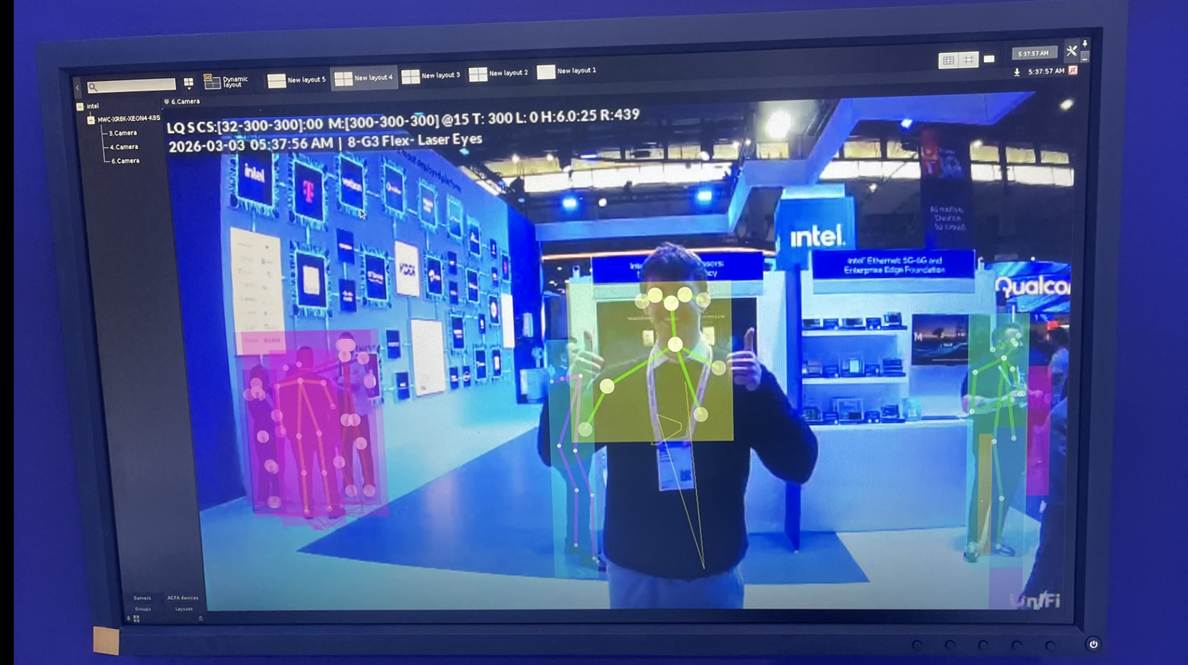
Edge computing at MWC 2026
In contrast to previous years, when edge computing had drifted somewhat to the periphery of the agenda, it was more prominent at MWC 2026, with discussions and demonstrations across the Fira reinfo…