
Q-Beat: Telco quantum deployment tracker
Trends and insights from our database of quantum technology trials and deployments within telcos worldwide

Trends and insights from our database of quantum technology trials and deployments within telcos worldwide

Following early AI investment, in 2021 SK Telecom announced its intention to become an AI company for the AI era. What actions has SK Telecom undertaken to this end? What role is AI playing across its business? And is AI paying off?

The telecom industry is going through a period of material change in respect to the silicon it utilises. This report examines the key dynamics and considerations in the locations where processing demand is at its highest: the RAN and AI factories.

As telcos team up to expand into new markets, what are the key lessons from existing joint ventures?

Recently, several telcos made the news with AI factory initiatives. We outline the reasons and the approaches to these investments.

Consumers need protection from fast-evolving cyber threats. Telcos are in a position to deliver credible solutions to this attractive market, building both increased consumer loyalty and new revenue streams.

Who is most likely to win the battle for contextually aware personal assistants on smartphones – and is there an opportunity for telcos?

AI will create large potential opportunities for telcos in connectivity and use case enablement. But telcos must manage expectations and prioritise their investments carefully.

It was no surprise that AI dominated MWC this year. But there were lots of other notable trends on the rise – including cybersecurity and data centres – and some that were disappointingly overlooked. Find out what the STL Partners team saw and missed at MWC 2025.

As AI’s energy consumption rises, so do sustainability concerns. This report explores why this technology is so power-intensive, how to mitigate its impact and whether it can help reduce emissions. It also examines four possible scenarios for future energy consumption – from unchecked growth to greater efficiency – and their sustainability implications.

Telco cloud deployment activity slowed down in Q2 2024 with only 20 deployments added to the tracker, eight of which were completed in earlier years. The remaining 12 included five 5G NSA cores (four already launched) and three SA cores, all of which we expect to go live by the end of 2024. In this report we analyse the prospects for 5G SA including a deep-dive on the state of deployments on the public cloud.

As society becomes ever more dependent on connectivity, telcos face a growing risk of being regulated like traditional utility companies. This report details how operators can avoid falling into “the utility trap” and drive growth in the next decade.
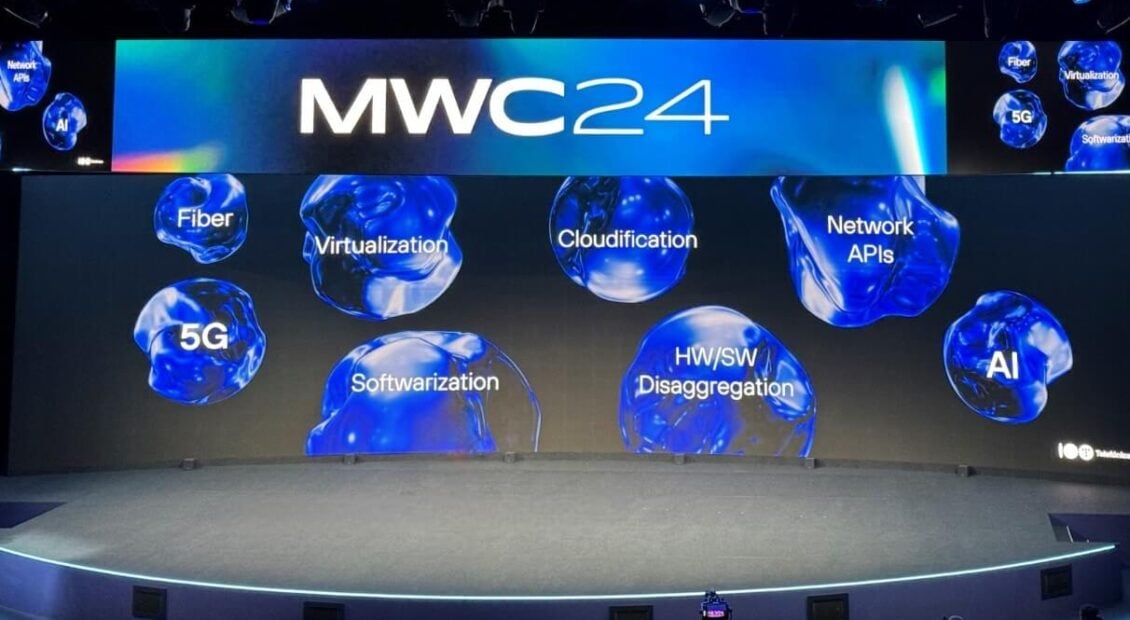
STL Partners’ Research team present their observations from and analysis of the biggest mobile industry event of the year. There was a lot of buzz around AI and API but behind the tech jargon, we saw evidence that our industry continues to morph to become more open and customer-focused.

Drawing from the experience of Lumen, SK Telecom, Telefónica, Verizon and Vodafone, this report identifies the steps, partnerships and expectations of a successful telco edge strategy.

Generative AI is expected to create significant value across the telecommunications industry. To capitalise on the opportunity, telcos must build new skills across their organisations. Getting this right is critical given the scale of implementation challenges and the significance of impact on how employees work.

At the start of 2023, we were hopeful that the year would be that of 5G SA. In the event, only seven deployments materialised in the first 6 months leaving a staggering 30 in our tracker as “in progress” and to be completed in the second half of 2023. In this report, we discuss how likely it is that these deployments will take place in 2023 or at all and if 5G SA still matters.

Digital identity has become a critical aspect of modern life, but security and user experience are suffering from market fragmentation and limited visibility or control for end users over how their personal data is used. How can telcos build on their existing services to solve these challenges?