Login to access
Want to subscribe?
This article is part of: Executive Briefing Service
To find out more about how to join or access this report please contact us
At a show led by China’s telecom players, tokenisation, embodied AI and satellite connectivity sat at the centre of the agenda, each revealing how China’s AI and connectivity market is taking its own distinctive shape.
Introduction
MWC Shanghai, held from 24 to 26 June, was a stage primarily for China’s telecom players. The show was firmly led by the big three Chinese telcos: China Telecom, China Mobile and China Unicom, alongside key vendors, including Huawei and ZTE.
From the stands to the conference rooms, almost every corner of the event circled back to one emerging concept: tokenisation. Robots were out in force too, as expected, but the focus had moved beyond kung fu demos towards real industrial applications. Commercial satellite operators, meanwhile, had a surprisingly strong presence, though their priorities in the Chinese market diverge from those in the West.
Three dominant themes stood out on the show floor, each reflecting China’s distinctive telecom environment and long-term ambitions:
- Tokenisation: a buzzword or a business model?
- Robotics and embodied AI
- Satellite and the Space-Air-Ground integrated network
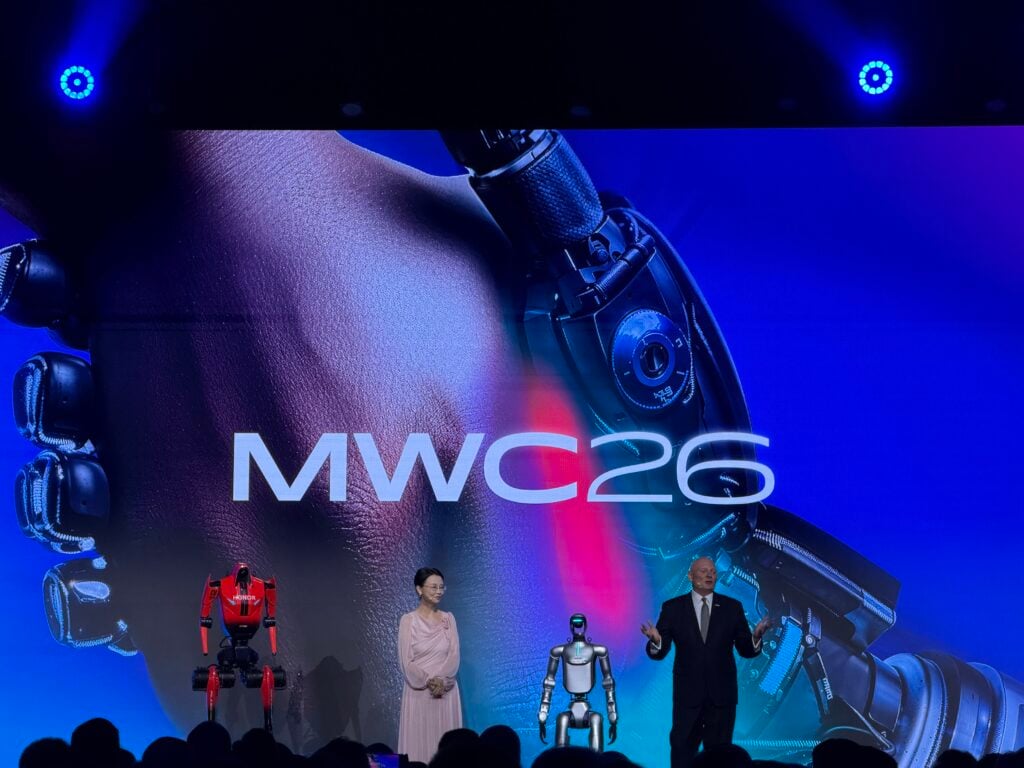
Honor robots co-hosting the opening ceremony
Source: STL Partners
From Barcelona to Shanghai, we can already see tangible progress on some of the themes from one show to the next. On most of the agenda, though, ambition still runs well ahead of deployment. Our hope for MWC Shanghai 2027 is that these ideas mature into practical, revenue-generating applications, and that the event draws broader participation across players in the region, so that the conversation extends beyond the Chinese market and into the wider Asian-Pacific story it could tell.
Related research:
- MWC 2026: AI but with more realism than hype
- MWC Doha 2025 had AI at its heart
- Lessons from China’s low-altitude economy