Login to access
Want to subscribe?
This article is part of: Consumer, Cybersecurity
To find out more about how to join or access this report please contact us
Five recent trends in consumer cybersecurity and how telcos can address them
Introduction
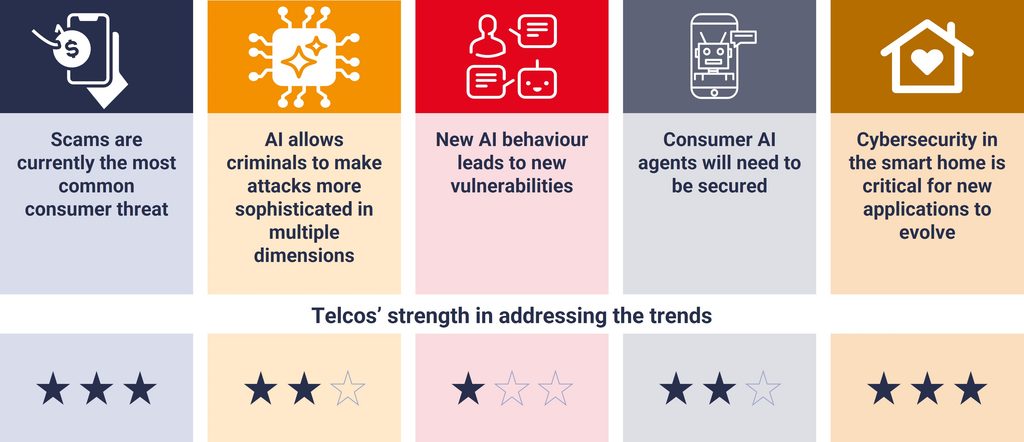
This short report focuses on five trends in the cyber landscape. Only one of them – scams – is quite well understood and addressed by telcos. Still, scams remain the main threat to consumers, and telcos’ efforts to protect their customers need not cease. Instead, telcos can explore the trend further and test whether they can generate more revenue from the solutions they offer. BT in the UK provides an example of a telco that sells its anti-scam security for double the launch price of two years ago.
The other four trends highlight the dynamic nature of the cyber landscape. Not many telcos address them yet. However, consumers need protection from them and this gives telcos more scope to evolve their security propositions.
Cyberthreats proliferate at an astonishing speed, in parallel with advances in AI. AI adoption will not be curbed; therefore, we need to accept rising threats and address them. For telcos, this means an opportunity to meet rapidly evolving customer needs and create value for their customers. However, to capture this opportunity, telcos need to offer advanced security solutions quickly and flexibly.
Five recent trends in consumer cybersecurity
If you are not a subscriber, enter your details below to download an extract of the report
Table of contents
- Executive summary
- The role of AI and the prevalence of scams
- Three other cybersecurity trends telcos need to address
- Recommendations
Related research
- Consumer innovation tracker
- Where does consumer innovation thrive?
- Securing the smart home: Lessons from leading telcos
- Revisiting the connected home
- Connect and protect: Telcos’ avenues of growth in consumer cybersecurity