
There are already many edge computing deployments by leading telecoms operators including Verizon, AT&T, Deutsche Telekom, Vodafone, Singtel, SK Telecom and China Mobile.
Edge computing deployments: What’s the big picture?
In 2022, we saw different telco edge strategies come to maturity. As the planning turns from partnerships, POCs and trials into real commercial deployments, we the below diagrams explores how the largest telcos have navigated edge deployments over the past few years:


Analysis
- 67% of the telcos mapped have partnered with a hyperscaler in some capacity. One of the most recent telcos to launch an edge deployment, Bell Canada, has done this in collaboration with AWS but had also already partnered with Google in 2021 to run core network functions on their Distributed Cloud Edge. For more information, see Hyperscalers & telcos: Edge partnership opportunities
- Of the hyperscalers, AWS Wavelength has seen the most uptake by large telcos across the globe. As part of their five partnerships, they have helped to deliver a range of use cases such as Edge CDN, Drone Delivery, AR/VR applications and autonomous vehicles. For more information on AWS and its role at the edge, see ‘AWS & Edge computing: Wavelength use cases and applications’.
- Verizon has some of the most mature edge deployments. They have increased the scale of their initial deployment of AWS Wavelength by adding new sites in Nashville, TN and Tampa, FL. They claim that 75% of the US population is now within 150 miles of a Wavelength zone.
- Certain telcos are taking a different approach. Cox Communications, a North American cable company, created a new business unit to roll out their full stack Edge-Cloud computing and services. Instead of partnering with a hyperscaler they have targeted different companies like CDN-turned-edge platform company StackPath. See ‘Cox Edge Q&A: How a cable company created an edge platform’ for more information on their position in the market.

Download this article as a PDF


Are you looking for advisory services in edge computing?
Read more about edge computing
Edge computing market overview
This 33-page document will provide you with a summary of our insights from our edge computing research and consulting work:
From cloud AI to hybrid AI: The rise of model cascading
The next phase of enterprise AI is likely to be more distributed than the first. Rather than routing every workload to a large cloud-hosted model, organisations are increasingly combining on-device, edge and cloud-based AI models in cascaded architectures. This article examines the drivers behind model cascading, its role in enabling hybrid AI and the ecosystem challenges that must be overcome for it to scale.
Inside the National Edge AI Hub
This article is based on a February 2026 discussion with Professor Rajiv Ranjan, Director of the National Edge AI Hub. It explores the Hub’s origins and ambitions, looking at how its network of university and industry partners ia supporting organisations deploy real-time AI in the physical world.
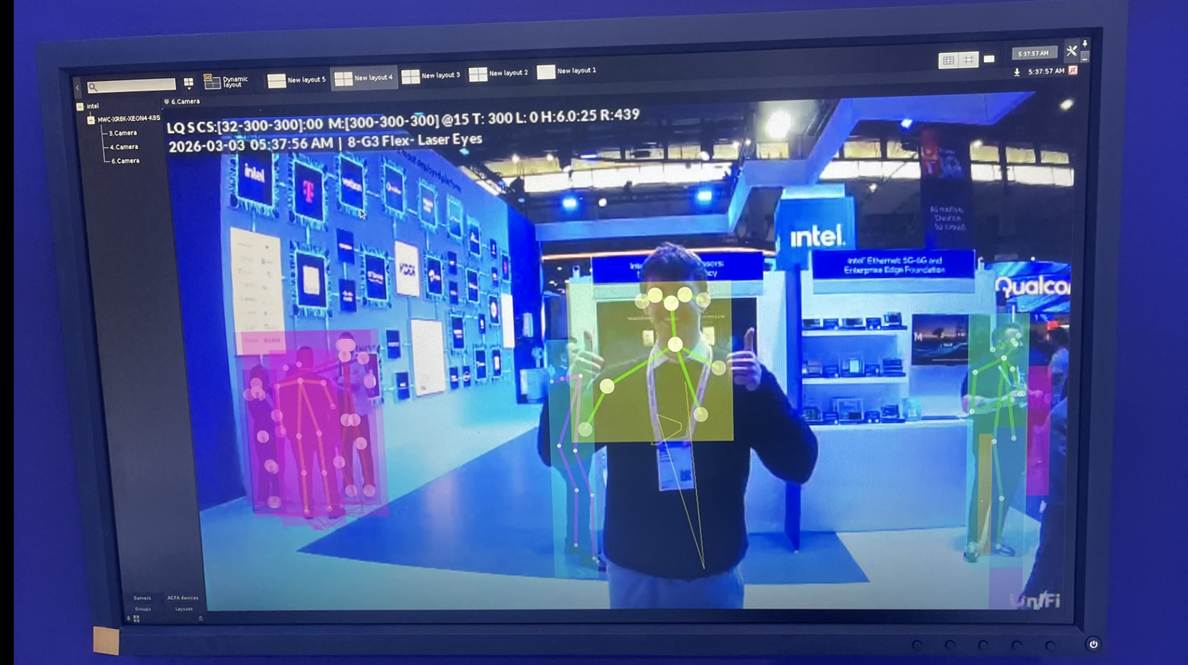
Edge computing at MWC 2026
In contrast to previous years, when edge computing had drifted somewhat to the periphery of the agenda, it was more prominent at MWC 2026, with discussions and demonstrations across the Fira reinfo…