
Download


The potential of deploying content caches deep within telecom networks is significant, particularly when paired with broader industry efforts to establish an open, standards-based framework for content delivery. However, given the high-profile financial challenges faced by several edge CDN players, including Qwilt, this article examines why the model has struggled to scale – and what its future outlook may hold.
What is edge CDN?
At STL Partners, we define edge content delivery networks (edge CDN) as content deployed at distributed locations deep within a telecom operator’s network. This contrasts with traditional CDN, where caches are primarily located at internet exchange points (IXPs) and third-party data centres located outside of the network.
Prominent examples of commercial edge CDN deployments (i.e. where usage of the CDN is sold as a service) include Qwilt’s Open Edge, Varnish’s Ora Streaming, Vecima Open CDN and Broadpeak Advanced CDN which leverage caching nodes deployed directly inside operator networks to bring content closer to end users.
It must be noted that there are scenarios where edge CDNs are deployed on a non-commerical basis. This includes CDNs deployed by content providers themselves to improve the quality of their respective services, for example, Apple Edge Cache, Google’s Youtube CDN and Meta’s edge caching infrastructure. Likewise, operators often cache content themselves to improve customer experience and reduce backhaul traffic from high bandwidth video content. We explore the concept of edge CDNs and their key use cases in more detail here.
Differences between traditional and edge CDN

Source: STL Partners
Inherently the commercial model for edge CDN looks different to that of traditional CDN, by nature of the greater involvement of telcos themselves. Traditional CDNs operate large footprints in colocation facilities and at IXPs to peer and cache content. Dependent on their capacity needs, customers purchase services on an elastic basis, or may just procure their own static boxes, while the CDN provider manages the long-term colo and capacity planning behind the scenes. In contrast, edge CDN deployments embed caches inside internet service provider (ISP) networks and are often delivered as a managed service with revenue-sharing and/or operator-provided infrastructure. The CDN provider in this case may have a preference for the operator to provide the underlying infrastructure since in-network caches may have uneven utilisation and hence the investment may be more difficult to justify without telco support.
How does edge CDN overlap with open CDN?
Akin to developments in the radio access network (RAN), the industry has also seen movement towards virtualised CDN (vCDN) – whereby CDN infrastructure is deployed in a more open, disaggregated way, thereby enabling CDN workloads to run on COTS hardware. This contrasts to legacy CDN stacks that are vertically-integrated and rely on software tightly coupled to their infrastructure
Parallel to the disaggregation of the infrastructure itself are also developments to create interoperability in between the the software layers across different CDNs. Development in this regard has mostly been driven by the Streaming Video Technology Alliance (SVTA) who seeks to develop a virtual overlay for CDN networks that enables an open, standards-based architecture for CDN operation.
Membership of the Streaming Video Technology Alliance
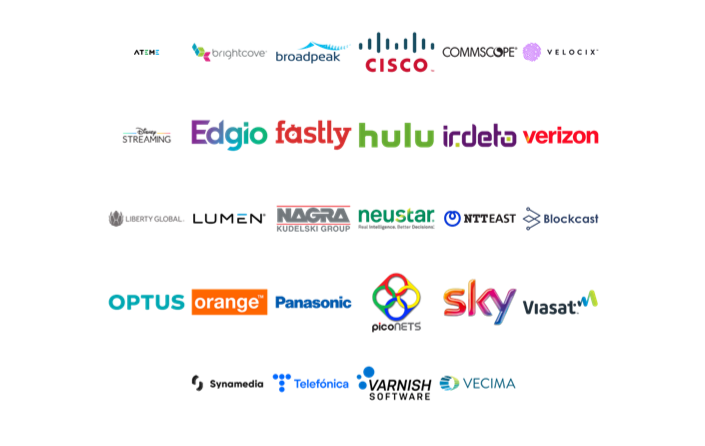
Source: STL Partners
While Open Caching does not necessarily prescribe an edge CDN deployment model, it enables edge CDN by offering a consistent technical and commercial framework for collaboration between content owners, CDNs, and ISPs – a factor that becomes increasingly important in edge CDN architectures compared with traditional deployments.
Why edge CDN?
There are several touted advantages of edge CDN over conventional CDN architectures:
- Quality of service: by caching content closer to the end user, there is lower network latency, and therefore an ability to deliver a better quality of service to end customers
- Reduced backhaul: fewer requests are routed to the central cloud, reducing the centralised data load and expanding network capacity without needing to build out additional network infrastructure.
When edge CDN is coupled with the Open Caching framework, as it often is, further benefits include greater operational simplicity for content providers using multiple CDN partners, and greater overall traffic observability.
Current state of play
However, despite the potential benefits, the CDN market remains dominated by traditional players – including Akamai, AWS, Azure, Cloudflare – none of which have heavily adopted an edge CDN delivery model.
Qwilt has been the prominent advocate of an edge CDN model having deployed over 2000 nodes within ISP-networks and secured major deals with several tier-one operators, including most recently Comcast. However, it is facing financial difficulties and exploring merger options, with its CEO, Alon Maor, recently stepping down.
Why has the edge CDN market not materialised?
There are two key reasons why the market has not materialised, yet:
1. Difficulties facing the wider CDN market are more acutely felt by edge CDN players. The wider CDN market has faced challenging conditions in the previous few years. Many players, including Stackpath and Edgio have become insolvent, and players such as Lumen, Ericsson and Verizon have divested their commercial CDN businesses. These financial challenges are owing to a myriad of reasons:
- Major content providers have adopted multi-CDN strategies in order to boost performance, capacity, redundancy and ultimately lower costs. For example, Paramount now uses six different CDN providers globally, whereas Disney uses two providers. In addition, some content providers have also developed their own CDN networks (i.e. Netflix Open Connect). This has created commercial tension between CDN providers and ultimately forced down prices further. For edge CDN players looking to scale, the resulting margin pressures have hindered their ability to achieve the scale they need to truly demonstrate service differentiation from traditional CDN players.
- Specialised CDN players have faced difficult competition by hyperscalers who can bundle their respective commercial CDN services with their wider cloud services.
- Advances in video optimisation has undermined the CDN commercial proposition.
2. The commercial model of edge CDN can prohibit scale. For edge CDN to deliver on its benefits – improved QoS and reduced backhaul – and it needs true scale. However, under current macroeconomic conditions, reaching this point has proved difficult for aspiring providers. The highly distributed nature of edge CDN limits some of the commercial efficiencies of a more centralised CDN footprint. Moreover, this model demands deeper collaboration with ISPs, which can slow the pace of deployment.
3. Many edge CDN providers have been unable to demonstrate the value proposition. The issues edge CDN, when paired with the aforementioned Open Caching Framework, sought to address have not proved as decisive as as initially envisaged. For example, the benefit of CDN federation, which was intended to alleviate the operational burden for content providers managing multiple proprietary CDN providers has not emerged as a strong differentiator. Larger content providers have instead built the internal capabilities to manage multi-CDN and allocate capacity across them in an increasingly dynamic fashion. Meanwhile, bandwidth intensive formats, such as 4K video streaming, have grown more gradually than anticipated muting the urgency for deep edge caching. Underlining this point, CDN-provider CDN77 stated in late-2024 that 4K represents less than 4% of the overall video playtime its CDN footprint supports. The lack of differentiation has therefore failed to justify the price premium often required to use edge CDN compared to traditional CDN that benefit from the economies of scale of being more centralised.
So what does the future hold for edge CDN?
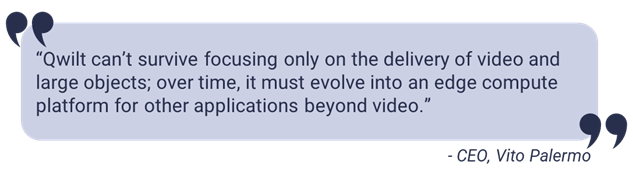
The likely future for edge CDN players is perhaps best summed up by a recent statement by Qwilt CEO, Vito Palermo:
The CDN market is a challenging, low-margin environment that has become increasingly unattractive to new entrants seeking to disrupt it. In the absence of a step-change in consumer content needs, the ability of edge CDN players to gain meaningful commercial traction in the near-term remains limited.
This difficulty is not unique to edge CDN players. Broadly, many CDN providers that have not diversified beyond content delivery into adjacent segments such as security and cloud are struggling to stay afloat. Akamai exemplifies the importance of this diversification. Despite being one of the largest CDN providers, its Q2 2025 financial results show that CDN services now account for less than a third of total revenues, with the remainder coming from its expansion into security and cloud computing.
What next?
This article will be followed by another instalment that looks in more detail at how major CDN players are pivoting into new ventures – particularly the inference-as-a-service market – and the parallels that can be drawn with telco efforts in edge computing.
Are you looking for advisory services in edge computing?
Download the Edge insights market overview
Download the Edge insights market overview
This 33-page document will provide you with a summary of our insights from our edge computing research and consulting work:

From cloud AI to hybrid AI: The rise of model cascading
The next phase of enterprise AI is likely to be more distributed than the first. Rather than routing every workload to a large cloud-hosted model, organisations are increasingly combining on-device, edge and cloud-based AI models in cascaded architectures. This article examines the drivers behind model cascading, its role in enabling hybrid AI and the ecosystem challenges that must be overcome for it to scale.

Inside the National Edge AI Hub
This article is based on a February 2026 discussion with Professor Rajiv Ranjan, Director of the National Edge AI Hub. It explores the Hub’s origins and ambitions, looking at how its network of university and industry partners ia supporting organisations deploy real-time AI in the physical world.
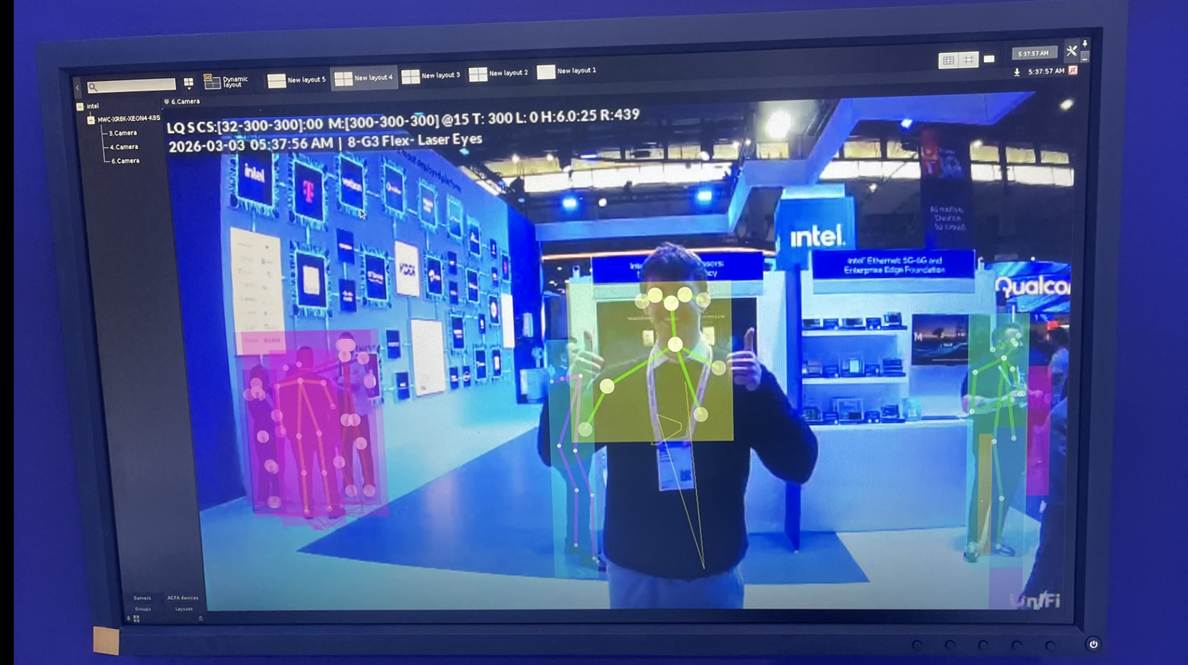
Edge computing at MWC 2026
In contrast to previous years, when edge computing had drifted somewhat to the periphery of the agenda, it was more prominent at MWC 2026, with discussions and demonstrations across the Fira reinfo…