hero-banner

Tag Archives: Vodafone

Telefonica leads Vodafone in more attractive markets

Telefonica leads Vodafone in more attractive markets

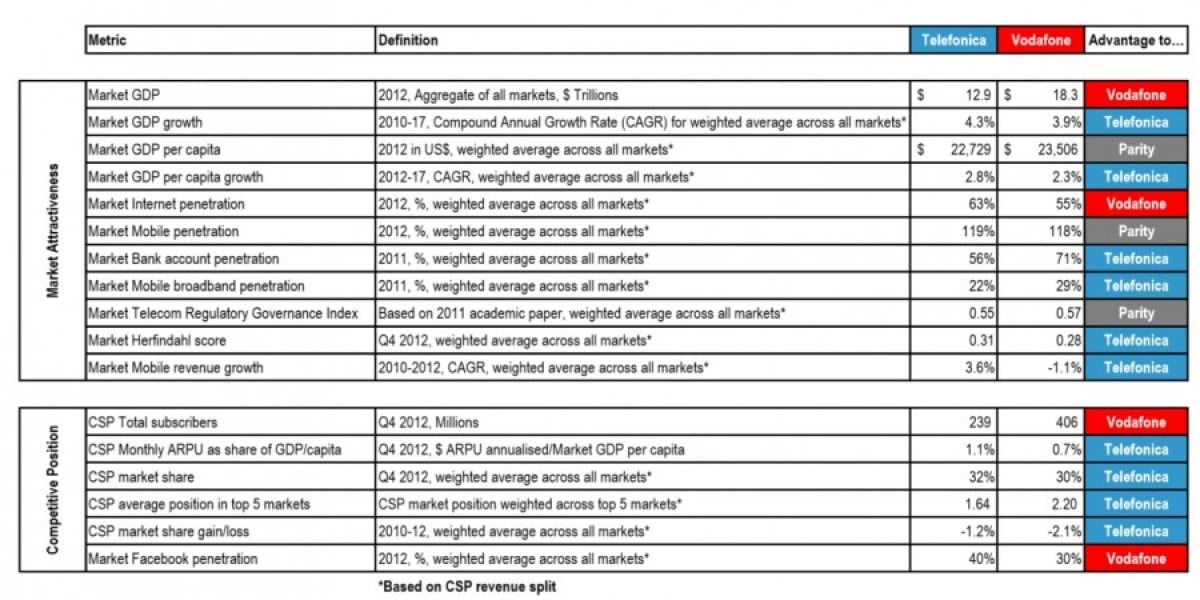
In this new report based on Telco 2.0 Transformation Index analysis we compare Vodafone’s competitive positioning with another European-centric multi-national, Telefonica. The results are surprising and instructive, showing that Vodafone faces substantial challenges if it is to grow in the foreseeable future.

Cisco, Microsoft, Google, AT&T, Telefonica, et al: the disruptive battle for value in communications

Cisco, Microsoft, Google, AT&T, Telefonica, et al: the disruptive battle for value in communications

Disruption is taking place across the voice and messaging space – not just with telcos. Established vendors and de facto technology standards are also being challenged. For example, Cisco, the market leader in enterprise telephony, finds itself being disrupted in key markets by other vendors offering more horizontally integrated solutions. This report provides an overview and insight into a number of vendors and technologies in the voice and messaging markets, including telco platforms and services, and LTE, RCSe, and WebRTC. Three telco case studies (Vodafone, Telefonica and AT&T) are also provided, examining their activities, products and results.

Communications Services: What now makes a winning value proposition?

Communications Services: What now makes a winning value proposition?

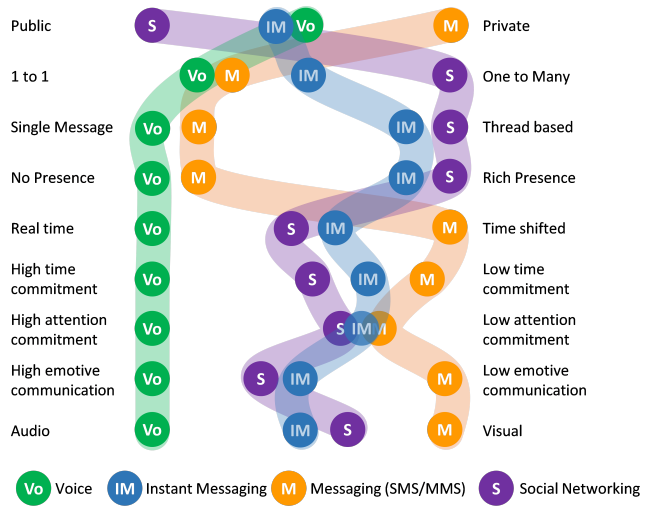
Consumer and enterprise communications behaviours are changing significantly around the globe as new solutions meet core needs more effectively and change customer expectations. This extract from our latest major report provides insight to the changes, and describes effective strategies that meet these evolving needs for both incumbents attempting to defend existing services and innovators seeking to disrupt and create new value. (December 2013, Executive Briefing Service)

Psychological and social advantages of voice, SMS, IM, and Social Media Dec 2013

The Future Value of Voice and Messaging

The Future Value of Voice and Messaging

Our new research shows how telcos can slow the decline of voice and messaging revenues and build new communications services to maximise revenues and relevance with both consumer and enterprise customers. It includes detailed forecasts for 9 markets, in which the total decline is forecast between -25% and -46% on a $375bn base between 2012 and 2018, giving telcos an $80bn opportunity to fight for. It also shows impacts and implications for other technology players including vendors and partners, and general lessons for competing with disruptive players in all markets. It looks at the impact of so-called OTT competition, market trends and drivers, bundling strategies, operators developing their own Telco-OTT apps, advanced Enterprise Communications services, and the opportunities to exploit new standards such as RCS, WebRTC and VoLTE. (November 2013, Executive Briefing Service). Future Value of Voice and Messaging Cover Small

Telco 2.0 Transformation Index: Technology Survey

Telco 2.0 Transformation Index: Technology Survey

150 senior execs from Vodafone, Telefonica, Etisalat, Ooredoo (formerly Qtel), Axiata and Singtel supported our technology survey for the Telco 2.0 Transformation Index. This analysis of the results includes findings on prioritisation, alignment, accountability, speed of change, skills, partners, projects and approaches to transformation. It shows that there are common issues around urgency, accountability and skills, and interesting differences in priorities and overall approach to technology as an enabler of transformation. (November 2013, Executive Briefing Service, Transformation Stream.) Telco 2.0 Transformation Index Tech Survey Cover Small

Telco 2.0 Transformation Index: Understanding Telefonica’s Markets and Market Position

Telco 2.0 Transformation Index: Understanding Telefonica’s Markets and Market Position

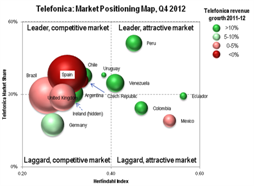
This extract from the Telco 2.0 Transformation Index shows our analysis of Telefonica’s markets and market position, including economic and digital market maturity, regulation, customers, competition and pricing. It is one part of our overall analysis of Telefonica’s progress towards transformation to the Telco 2.0 business model. The other parts of the Telefonica analysis are: Service Proposition, Finances, Technology, Value Network, and an overall summary. Telefonica is one of the companies analysed and compared in the first tranche of analysis that also addresses Vodafone, AT&T, Verizon, Axiata, SingTel, Etisalat and Ooredoo (formerly Qtel). (August 2013, Executive Briefing Service, Transformation Stream.) Telefonica Telco 2.0 Transformation Index Small

Sprint-Softbank: how it will disrupt the US market

The Japanese and French markets have both been disrupted through the entry of low-cost competitors offering substantial price reductions. We think that Softbank’s acquisition of Sprint is a signal that the same is to soon come in the US given Softbank’s experience as a successful disruptor in Japan. (January 2013, Executive Briefing Service).
Digital Commerce Flywheel December 2012

A Practical Guide to Implementing Telco 2.0

How can communications services providers (CSPs) transform their businesses from Telco 1.0 (infrastructure-led stasis) to Telco 2.0 (sustainable innovation-led growth)? An essential, step-by-step guide to the implementation of new Telco 2.0 business models, providing telecoms executives and their partner companies with a systematic approach to capitalise on new opportunities and neutralise potential threats. The report outlines robust frameworks and methodologies for selecting the right Telco 2.0 strategy for each organization, identifying and implementing the key opportunities, and avoiding expensive and time-consuming mistakes. (December 2012, Telco 2.0 Transformation Stream) Telco 2 Implementation Cover

Europe’s brutal future: Vodafone and Telefonica hit hard

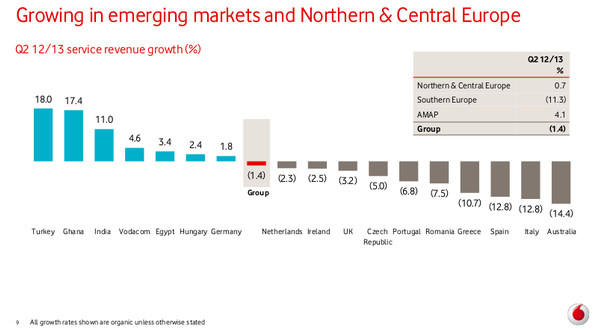
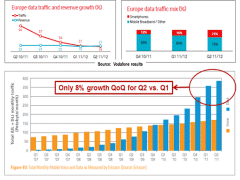
In our recent briefing European Mobile: The Future’s Not Bright, It’s Brutal, we predicted that European operators faced a grim future. New figures from Vodafone and Telefonica suggest that, unfortunately, the grim future is arriving fast. (November 2012, Executive Briefing Service, Transformation Stream.)
Vodafone results Nov 2012

Cloud 2.0: the fight for the next wave of customers

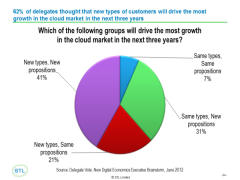
The fight for the Cloud Services market is about to move into new segments and territories. In the build up to the launch of our new strategy report, ‘Telco strategies in the Cloud’, we review perspectives on this shared at the 2012 EMEA and Silicon Valley Executive Brainstorms by strategists from major telcos and tech players, including: Orange, Telefonica, Verizon, Vodafone, Amazon, Bain, Cisco, and Ericsson (September 2012, Executive Briefing Service, Cloud & Enterprise ICT Stream).
Cloud Growth Groups September 2012

Innovation Strategies: Telefonica 2.0 Vs. Vodafone 2.0

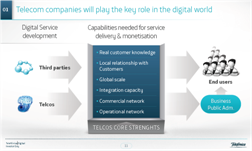
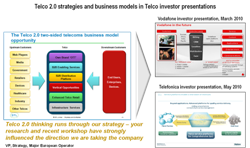
Telefonica and Vodafone are both European-based tier 1 CSPs with substantial revenues, cash flows and subscribers. They have both expanded beyond Europe – Vodafone into Africa and Asia and Telefonica into Latin America. However, their Telco 2.0 strategies are rather different. In this extract from our forthcoming report, A Practical Guide to Implementing Telco 2.0, we outline their Telco 2.0 strategies and their benefits and risks. (September 2012, Executive Briefing Service, Transformation Stream.)
Telefonica Strategy 2.0 Chart

Telco 2.0: Killing Ten Misleading Myths

‘Telco 2.0’ has evolved considerably since we put forward the original concept for telcos’ future success in 2006. Here we dispel ten myths and misunderstandings that have also evolved that can misdirect strategy. (August 2012, Executive Briefing Service, Transformation Stream.)
impact of 2sbm aug 2012 small

Mobile Broadband 2.0: The Top Disruptive Innovations

Mobile Broadband 2.0: The Top Disruptive Innovations

Key trends, tactics, and technologies for mobile broadband networks and services that will influence mid-term revenue opportunities, cost structures and competitive threats. Includes consideration of LTE, network sharing, WiFi, next-gen IP (EPC), small cells, CDNs, policy control, business model enablers and more. (March 2012, Executive Briefing Service, Future of the Networks Stream).
Trends in European data usage

The value of “Smart Pipes” to mobile network operators

Regardless of business strategy, the development of ‘Smart Pipes’ – more intelligent networks – will be a key driver of shareholder returns from operators. Smarter networks will also benefit network users – upstream service providers and end users, and operators, and their vendors and partners, will need to compete to be the smartest. What are they, why are they needed, and what are the key strategies employed to develop them? (February 2012, Foundation 2.0, Future of the Networks Stream).
Facebook user saturation bubble chart

‘Under-The-Floor’ (UTF) Players: threat or opportunity?

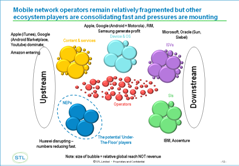
The telecoms industry often puts so-called OTT (over-the-top) players like Google and Facebook at the forefront of its concerns, as they pose new competition for services and applications. But what about encroachment of companies “underneath” the telcos, displacing them from their core asset, the network? Telco 2.0 examines the strategic threats and opportunities from wholesale providers, outsourcers and government-run broadband networks. (January 2012, Executive Briefing Service, Future of the Networks Stream).
UTF Image Jan 2012