
Telecoms 2023: Meaningful growth in challenging times
How telecoms can adapt and offer customers and other stakeholders an attractive way forward in markets facing inflation, and geopolitical and environmental challenges.
More telcos are making deals to run their VNFs on the public cloud. Not much is live yet. But cloud hosting of network functions will support telcos in realising the benefits of cloud-native, and we believe telcos can safely go further and faster.
Developing edge-enabled services is complicated; there are key decisions to be made at each level of the value chain, starting with infrastructure. Leveraging results from a survey conducted by STL Partners with 150 CSPs, this report outlines why edge infrastructure will be multi-cloud and what telcos should do about it.
As telecoms operations become increasingly softwarised, network functions are getting broken down into their individual parts, and reassembled as an essential part of the IT stack for industry-specific applications and services. In this disaggregated telco value chain, is there anything left that is distinctively ‘telco’?
Edge computing offers an opportunity for operators to grow their B2B businesses. This report outlines five types of B2B edge services that telcos can offer, and the key considerations to ensure success.
Born of a unique partnership between Deutsche Telekom and Cisco, ngena leverages the networks of partners worldwide to provide a global enterprise connectivity platform. How did it come about, how successful has it been, and what does it teach us about innovation in telecoms?
How can multiple access technologies (4G, 5G, Wi-Fi, fixed line) be used together to deliver a resilient, optimised and consistent experience of network quality and coverage? An introduction to the landscape, opportunities and challenges in providing a single user experience across multiple networks.
Edge computing is a strategic opportunity for telcos. We examine the driving needs and applications for telco edge computing, describe the market and the options for telcos, discuss their partnerships with hyperscalers and recommend key actions.
What should telcos do to bridge the gaps between current hype, actual performance, and future promises on 5G? We argue that a data-driven and forensic approach to roll-out and marketing will be the key, particularly in the uncertain economic environment driven by the COVID-19 pandemic, and review the timelines for future applications.
Analysis of the results of the first phase of our telecoms industry survey on purpose, leadership and culture shows the status of the industry and key drivers, and uncovers some important barriers to progress.
Telcos with a clear focus on what they are trying to achieve will do better at the risky business of M&A. So who’s buying what, and who’s doing well?

With Multi-Access Edge Computing (MEC), telcos can move workloads and applications closer to customers, potentially enhancing experiences and enabling a plethora of new use cases. But with competition looming from other players, telcos need to start commercialising MEC. We have identified and modelled five viable telco business models.
STL Partners published the inaugural version of our Digital Investment Database in early July, and we’ve now issued our first update, including a brief overview of Softbank’s acquisition of ARM and Verizon’s purchases of Yahoo! and Fleetmatics.

M&A and majority investment are key tools in building digital businesses. But are telcos actively investing? We look in detail at SingTel, Telstra and Verizon, which have committed significantly to digital investment to extend their businesses. We also discuss why most European operators lag their Asia-Pac and North American peers. Our analysis is based on the newly-developed STL Partners Digital Investment Database, which tracks investments by 22 leading service providers.

Becoming a Telco Cloud Service Provider (TCSP) is a new vision for the future of telecoms operators, which promises hugely improved agility, a fundamentally new business model, new services, and new growth. What is this vision, how would it work, and how can it overcome the barriers to change that have thwarted most previous efforts?

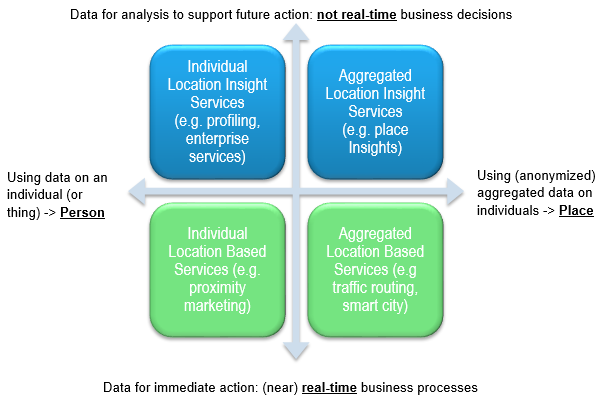
Drawing insight from the experience of early adopters (including Telefonica, Singtel and DTAG) and exploring the technology options available to operators, we show how operators can best use their distinct advantage over other players in the $5bn location insights marketplace. (October 2015, Foundation 2.0, Executive Briefing Service.)

We believe that the global telecoms market is approaching a critical moment of change, as strategic drivers and enablers are combining to open the door to a fundamental shift in the industry. We show how and why with highlights of our recent research, and set the scene for a new vision for Telco 2.0 – what telcos should be in the future, and how to get there.