Login to access
Want to subscribe?
This article is part of: Consumer
To find out more about how to join or access this report please contact us
AI is driving the rebranding of smart glasses, but more importantly, it will drive the use cases that will see adoption of this personal device category finally take off.
Welcome to our ‘Coffee break reading’ series. These pieces are designed to be short and easy to read, presenting our opinion on a hot topic and challenging you to think about it too.
Introduction
Smart glasses have recently seen a rebranding and are now more often than not called ‘AI glasses’. This is not just marketing: AI is playing a transformative role in the smart glasses market, as it gets integrated into the core of the device and supports the building of new use cases.
The market for smart glasses is already in the millions of units a year, up from tens of thousands of units just five years ago. Successfully solving the miniaturisation challenge and fitting the device into designs people want to wear have made this growth possible. But the real catalyst for the category is the emergence of devices with AI in the core- not an add-on in applications, but intrinsic to the way the device is used.
What still needs to line up for the market to scale is a set of use cases where smart glasses go beyond simply substituting a smartphone. Social acceptance of devices that can record without people’s knowledge or consent is still to be achieved but once really good use cases exist, people’s attitudes tend to change. Pricing and battery life are two other prickly factors, but ones that we expect to gets sorted out. But what the market really needs is another big brand beyond Meta- for example Apple or Google- to take it really seriously and deliver some great AI glasses.
In this short report, we explain why we believe that the question for AI glasses is when, not if, they will become part of people’s lives and share our views on how the above factors can come together to make this market blossom at long last. We also look at what roles telcos can play, beyond just distribution partners.
What the AI glasses market needs to scale
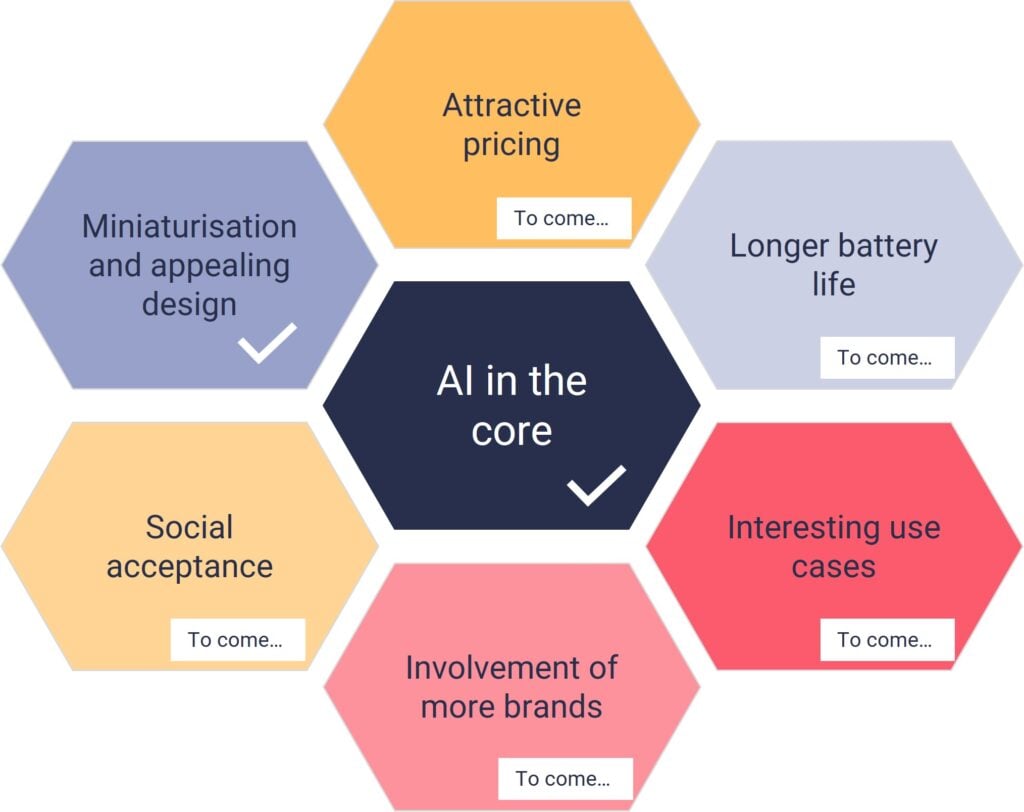
Source: STL Partners
Related research
- Where does consumer innovation thrive?
- AI for consumers: Telcos’ efforts to monetise AI
- The future of (really) useful smartphone personal assistants