Satellite direct-to-device (D2D) services poised for mainstream adoption by 2026, finds STL Partners in latest research
3 min read- Satellite direct-to-device (D2D) services are expected to enter the mainstream by 2026, expanding across multiple regions, including Europe, North America and the Middle East
- Starlink and AST SpaceMobile have dominated recent announcements on the commercial launch of D2D services in 2026
- All three Chinese telcos have received regulatory approval to offer satellite-based mobile services to consumers
LONDON – 12 November 2025 – The past month has seen a surge in announcements from telcos and satellite/non-terrestrial network (NTN) providers unveiling plans to commercially launch D2D services in 2026. According to the latest update of Skywatch, STL Partners’ satellite tracker, five out of 14 announcements since the start of October 2025 confirm upcoming D2D commercial launches across multiple regions, led by two main NTN players, Starlink and AST SpaceMobile.
D2D collaborations and commercial launch announcements since the start of October 2025

Source: STL Partners
STL Partners’ analysis of 130 announcements since January 2024 finds that only 22% of collaborations between telcos and NTN operators have progressed to a beta or commercial launch, while 46% remain at the collaboration stage. However, with Starlink and AST SpaceMobile now firmly advancing towards widespread commercialisation, this share is expected to rise significantly next year. 2026 could mark a tipping point where D2D services enter the mainstream and move from early deployments in the US and China to broader adoption across global markets.
“Recent announcements show AST SpaceMobile expanding its commercial footprint to North America and the Middle East, complementing its existing partnerships in Europe and Japan with Vodafone and Rakuten Mobile respectively. With Bell, Verizon, and AT&T as investors, these operators are positioning themselves to rival Starlink’s partnerships with T-Mobile and Rogers. But unlike Starlink’s independent business model, AST’s investor-backed approach gives telcos a stronger hand in shaping its strategy”, claims Krsna Singh, research analyst at STL Partners.
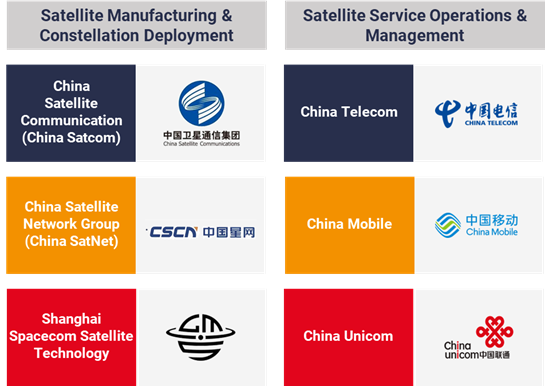
In China, the regulatory process is also helping to accelerate the development of D2D services. In September 2025, China Mobile and China Unicom both obtained satellite-based mobile communication service licences, following China Telecom, which received its licence two years earlier. This marks that all three Chinese telcos are now officially authorised to provide satellite-based mobile services for consumers. The approval paves the way for broader adoption of D2D services across the country.
Overview of major Chinese players in satellite communications
Source: STL Partners
Current D2D services in China are enabled by the TianTong GEO system and the BeiDou GEO/MEO constellation. Following the licence approval, China Mobile announced the launch of “BeiDou + TianTong” integrated text and voice services, with China Unicom introducing commercial text and voice offerings via the TianTong system. Two mega-constellations, Guowang (GW) and G60 Qianfan, are also in planning and deployment, with ambitions to deliver D2D mobile broadband capabilities alongside existing offerings. However, launch timelines remain unconfirmed.
As the D2D ecosystem accelerates toward commercial maturity, 2026 is shaping up to be a pivotal year for the integration of satellite and terrestrial networks. The Skywatch tracker will continue to provide up-to-date insights to guide telcos navigate this rapidly evolving space. It will be updated monthly. You can find more information about Skywatch here.
For media enquiries, click here to contact our team.
STL Partners is a leading research and consulting company that focuses on the telecom industry and adjacent markets by helping telcos and their partners innovate, grow and stay ahead of the competition.