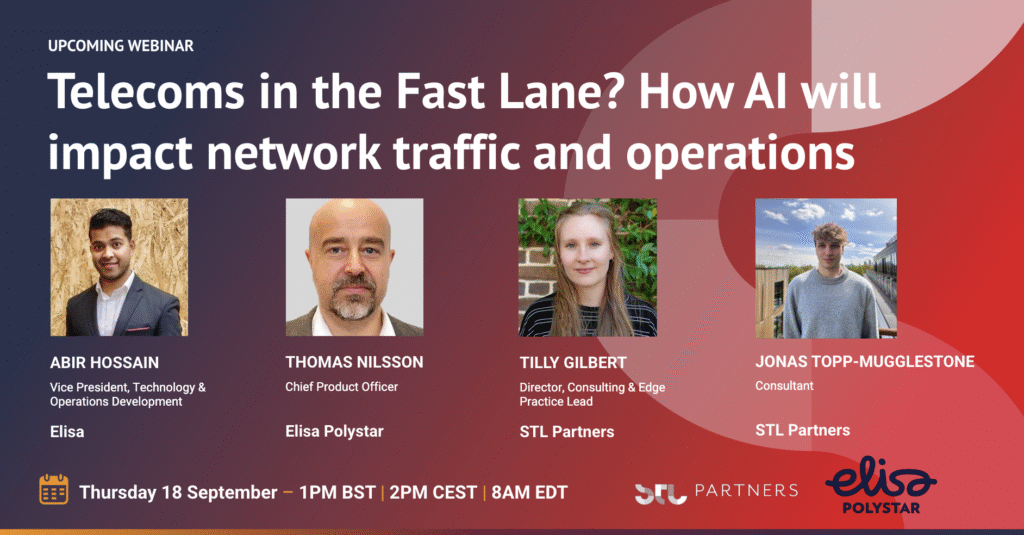
AI is transforming digital infrastructure – not just through new application demands, but also in how networks themselves are built and operated. While some forecast a surge in traffic from AI-enabled services like AR wearables, real-time video, and smart automation, STL’s latest research suggests the reality will be far more selective, shaped by user adoption, cost, and regulation.
At the same time, telcos are under pressure to modernise their own operations. AI-native approaches to assurance, optimisation and automation could reduce costs, enable dynamic service delivery, and unlock new revenue streams – if the right capabilities and data foundations are in place.
This webinar brings together findings from two STL reports to offer a clear view of how AI will affect both traffic volumes and telecom business models through 2032. We explore what’s realistic, what’s hype, and how operators can position themselves to both withstand and benefit from the coming shifts.
In this webinar, we explore:
- Which AI-enabled use cases will meaningfully increase telecom traffic and which will remain niche?
- How uplink-heavy applications like smart glasses and real-time AI video are likely to shape future mobile traffic?
- How operators must integrate AI into their own operating models in areas like assurance and resource management to improve performance and efficiency?
- How operators can monetise the AI wave – both by supporting it and by using it?
Panellists
- Abir Hossein, Elisa, Vice President, Technology & Operations Development
- Thomas Nilsson, Elisa Polystar, Chief Product Officer
- Tilly Gilbert, STL Partners, Director, Consulting & Edge Practice Lead
- Jonas Topp-Mugglestone, STL Partners, Consultant