hero-banner

Tag Archives: Verizon

M&A Database cover

Digital M&A and Investment Strategies

M&A and majority investment are key tools in building digital businesses. But are telcos actively investing? We look in detail at SingTel, Telstra and Verizon, which have committed significantly to digital investment to extend their businesses. We also discuss why most European operators lag their Asia-Pac and North American peers. Our analysis is based on the newly-developed STL Partners Digital Investment Database, which tracks investments by 22 leading service providers.

Problem: Telecoms technology inhibits operator business model change (Part 1)

The last few years have seen attempts by many leading telecoms operators to refresh their business model and generate new sources of growth and value. Now many digital initiatives are being scaled back. Telefonica and Telenor, two companies in the vanguard of the ‘drive to digital’ have both disbanded their digital organisations. In the first of two reports, STL Partners explores why efforts to yoke platform and product innovation businesses to a traditional infrastructure business have proved so difficult. The financial and operational constraints associated with traditional telecoms – particularly the need for long investment cycles in ‘one-function’ infrastructure – have made achieving the switch to ‘agile digital innovation’ all but impossible. But all that may be about to change and the future could be a little brighter.

Telstra: Battling Disruption and Growing Enterprise Cloud & ICT

When Amazon Web Services (AWS) landed in Australia in 2012, everyone expected carnage for Australian carriers. Telstra’s Network Applications & Services division, though, is growing fast and making some interesting moves. How did Telstra do it, and what else can be learned from its successes and its latest moves into the Healthcare market?

Reality Check: Are operators’ lofty digital ambitions unrealistic given slow progress to date?

STL Partners’ industry transformation analysis, including a recent global survey of telco executives, suggests operators’ digital ambitions are rising fast but, given 9 substantial implementation challenges, too little is currently being done to engender successful industry-wide business model transformation. We also look at the lessons from NTT DoCoMo, one of the operators that has made the most overall progress towards a ‘digital’ model.

Five Principles for Disruptive Strategy

What is disruption, when is it a good idea, and what do you do when it happens to you? We illustrate five principles of disruptive strategy based on our analysis of the telecoms and adjacent markets over the past eight years. The analysis covers both principles of creating and defending against disruption.

Triple-Play in the USA: Infrastructure Pays Off

Triple-Play in the USA: Infrastructure Pays Off

Verizon and Comcast have invested in high bandwidth fibre and cable networks, whereas AT&T has until recently focused on U-Verse, an IPTV play. Which strategy is winning out and why? The answer is surprising and may transform the US and other markets, and there are parallels with Apple and Samsung’s ‘deep value’ strategies of investing in assets that are hard to replicate.

Telco 1.0: Death Slide Starts in Europe

Telco 1.0: Death Slide Starts in Europe

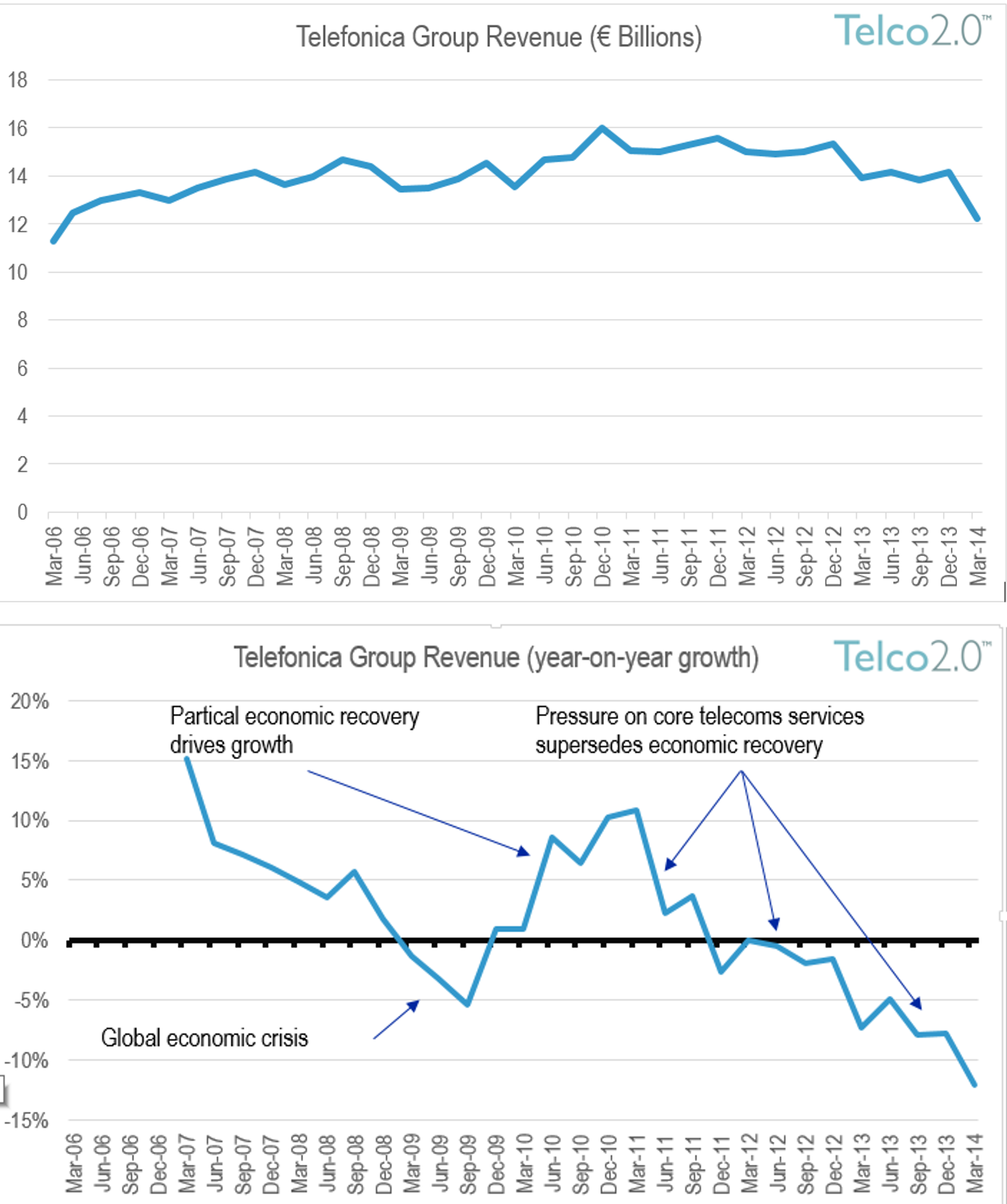
The latest results for Telefonica are grim, showing a 12% y-o-y revenue decline, following Orange and Deutsche Telekom’s 4% drops. This signals unequivocally that transformation is now a necessity not a luxury for European operators – and the rest of the world is not far behind. Longer term recovery is possible but not a certainty – what are the key steps? (May 2014, Foundation 2.0, Executive Briefing Service, Telco 2.0 Transformation Stream.)
Enterprise Mobility Framework December 2013

Telefonica leads Vodafone in more attractive markets

Telefonica leads Vodafone in more attractive markets

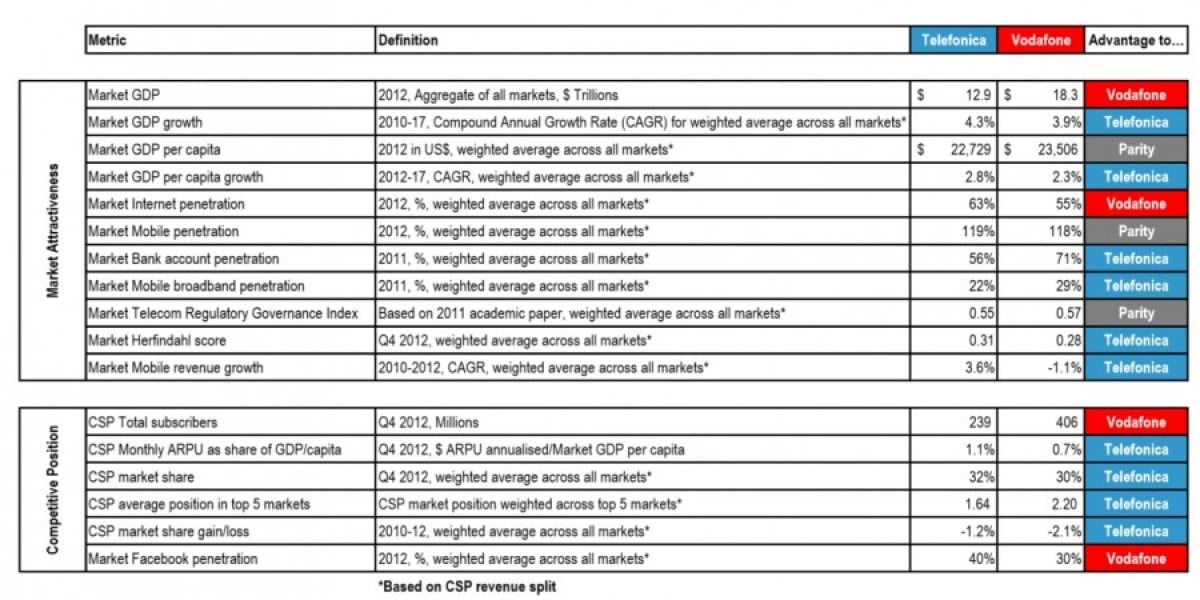
In this new report based on Telco 2.0 Transformation Index analysis we compare Vodafone’s competitive positioning with another European-centric multi-national, Telefonica. The results are surprising and instructive, showing that Vodafone faces substantial challenges if it is to grow in the foreseeable future.

Self-Disruption: How Sprint Blew It

Self-Disruption: How Sprint Blew It

How Sprint’s necessary shutdown of Nextel turned into a commercial disaster, losing valuable customers, reputation, and market share. Our analysis shows that amdist the drama of the Softbank deal and the complexity of a major network upgrade, SMB customer needs were neglected, and its competitors (VZW, AT&T and T-Mobile) stepped smartly in.

Digital Commerce 2.0: New $50bn Disruptive Opportunities for Telcos, Banks and Technology Players

Digital Commerce 2.0: New $50bn Disruptive Opportunities for Telcos, Banks and Technology Players

Telcos, Internet and technology players, banks and payment networks have disruptive $billion opportunities to act as intermediaries / enablers in mobile commerce and personal cloud services, based on the appropriate use of customer data. This report is a unique and comprehensive strategic guide for success in these roles. It analyses the strategies of the main and cutting-edge players, and outlines key success factors in designing and delivering customer propositions, technology, organisation and value network strategies. It also includes evaluations of the related strategic opportunities of ‘raw big data’, professional data services, and internal data use, and a business model showing how one type of candidate for the intermediary role, a telco, could grow profitable new revenues equivalent to c.$50Bn (5% of existing core revenues) within five years. (October 2013, Dealing with Dsiruption Stream). Telco 2.0 Transformation Index Small

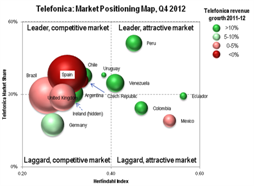
Telco 2.0 Transformation Index: Understanding Telefonica’s Markets and Market Position

Telco 2.0 Transformation Index: Understanding Telefonica’s Markets and Market Position

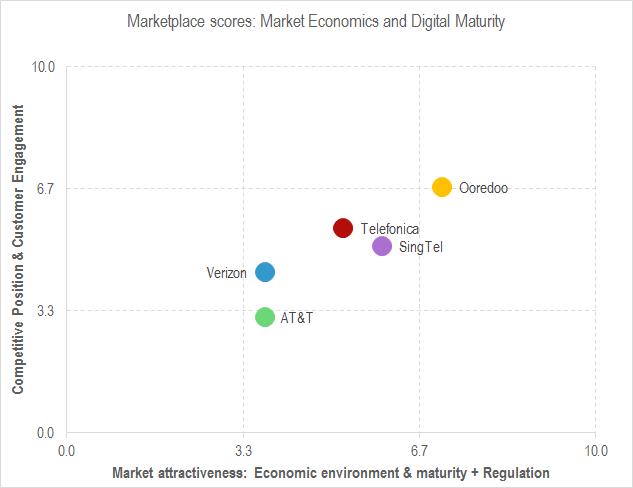
This extract from the Telco 2.0 Transformation Index shows our analysis of Telefonica’s markets and market position, including economic and digital market maturity, regulation, customers, competition and pricing. It is one part of our overall analysis of Telefonica’s progress towards transformation to the Telco 2.0 business model. The other parts of the Telefonica analysis are: Service Proposition, Finances, Technology, Value Network, and an overall summary. Telefonica is one of the companies analysed and compared in the first tranche of analysis that also addresses Vodafone, AT&T, Verizon, Axiata, SingTel, Etisalat and Ooredoo (formerly Qtel). (August 2013, Executive Briefing Service, Transformation Stream.) Telefonica Telco 2.0 Transformation Index Small

Cloud 2.0: the fight for the next wave of customers

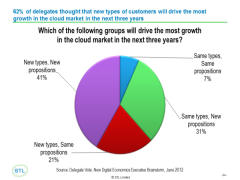
The fight for the Cloud Services market is about to move into new segments and territories. In the build up to the launch of our new strategy report, ‘Telco strategies in the Cloud’, we review perspectives on this shared at the 2012 EMEA and Silicon Valley Executive Brainstorms by strategists from major telcos and tech players, including: Orange, Telefonica, Verizon, Vodafone, Amazon, Bain, Cisco, and Ericsson (September 2012, Executive Briefing Service, Cloud & Enterprise ICT Stream).
Cloud Growth Groups September 2012