Login to access
Want to subscribe?
This article is part of: Network Innovation
To find out more about how to join or access this report please contact us
Welcome to this series analysing network autonomy efforts by leading telcos worldwide. In this third edition, we put the spotlight on a leading multinational operator in the journey toward autonomous networks.
In the spotlight: AIS
AIS, Thailand’s leading telecommunications network operator, has adopted an incremental, focused approach to autonomous networks (ANs) in pursuit of an ambitious strategic goal: that of evolving from a telco into what it calls a ‘cognitive tech-co’. Focusing initially on RAN fault management (FM) and customer complaint handling, AIS has partnered with Huawei to deliver high levels of autonomy in these domains.
If you are not a subscriber, enter your details below to download an extract of the report
Operating in a low-ARPU market, AIS lacks the resources larger operator groups devote to ANs. So, it has relied heavily on Huawei — as 75% of its mobile network runs on Huawei platforms.That dependency raises the question of whether AIS can reap the full benefits of ANs, and whether it can develop vendor-neutral technology along with in-house software and AI skills.
AIS: AN level timeline
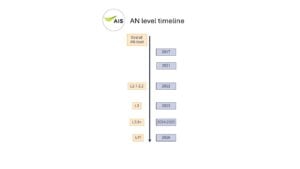
Source: STL Partners
Related research