Login to access
Want to subscribe?
This article is part of: Executive Briefing Service
To find out more about how to join or access this report please contact us
Physical AI is an intelligent AI ‘brain’ paired with a machine ‘body’ that can act on and change aspects of the real world. This report maps its value chain, examines global telcos’ early moves, and looks ahead to their opportunities in the domain over the next five years and beyond.
Physical AI is coming. Are telcos ready?
Main categories of physical AI
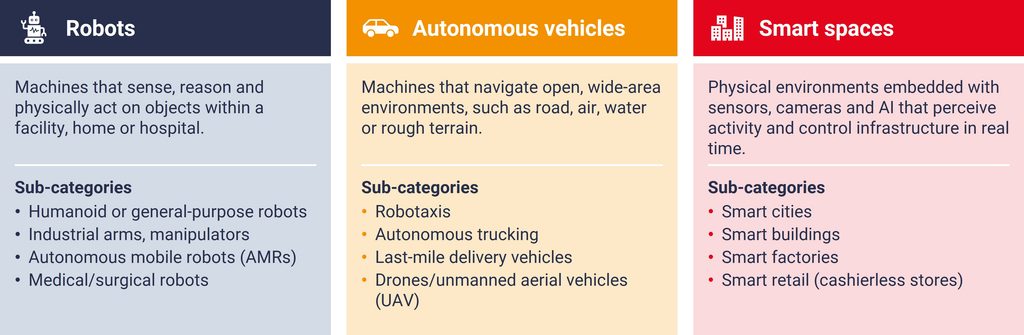
Source: STL Partners
If you are not a subscriber, enter your details below to download an extract of the report
- What telcos are doing in physical AI today: Seven leading telcos from Asia, Europe and North America are positioning themselves in the layers of network performance, edge and cloud compute, orchestration and training data. However, most of their activity remains at the demonstration or pilot stage.
- A closer look at China’s physical AI market: Three Chinese telcos’ activities span the whole value chain, from investment funds and own-brand robots to robot SIMs and management platforms, in a market that is heavily funded but not yet commercially proven.
Value chain of physical AI
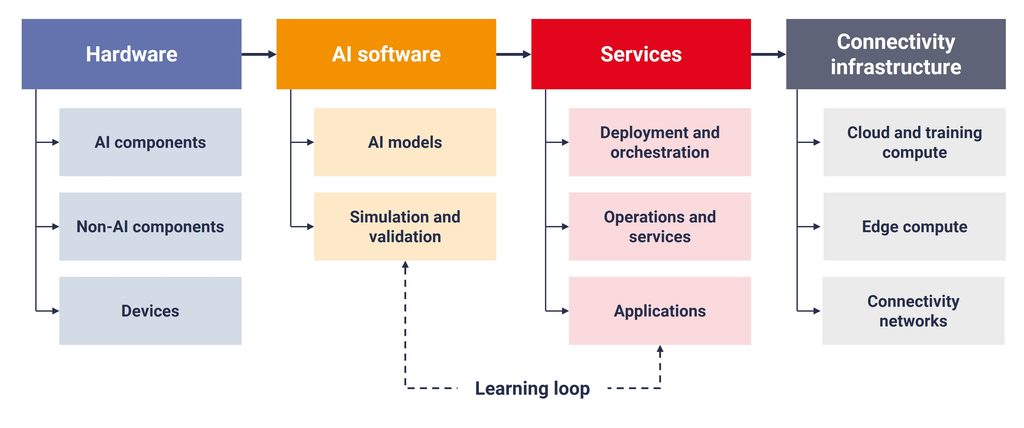
Source: STL Partners
Table of contents
- Executive Summary
- Defining physical AI
- Challenges and complexities of physical AI
- What telcos are doing in physical AI today
- SoftBank
- NTT Docomo
- SK Telecom
- KT
- Deutsche Telekom
- T-Mobile US
- AT&T
- A closer look at China’s physical AI market
- Telcos’ future opportunities in physical AI
- Conclusions
Related research
- Telco generative AI adoption tracker
- How telcos generate AI revenue
- Drone detection: The leading telco dual-use defence play