Case study overview
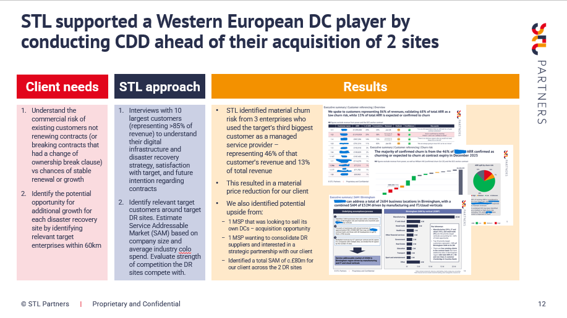
- A European data centre operator engaged STL to conduct commercial due diligence on a proposed carve-out of two data centre facilities and accompanying business unit from an IT service provider.
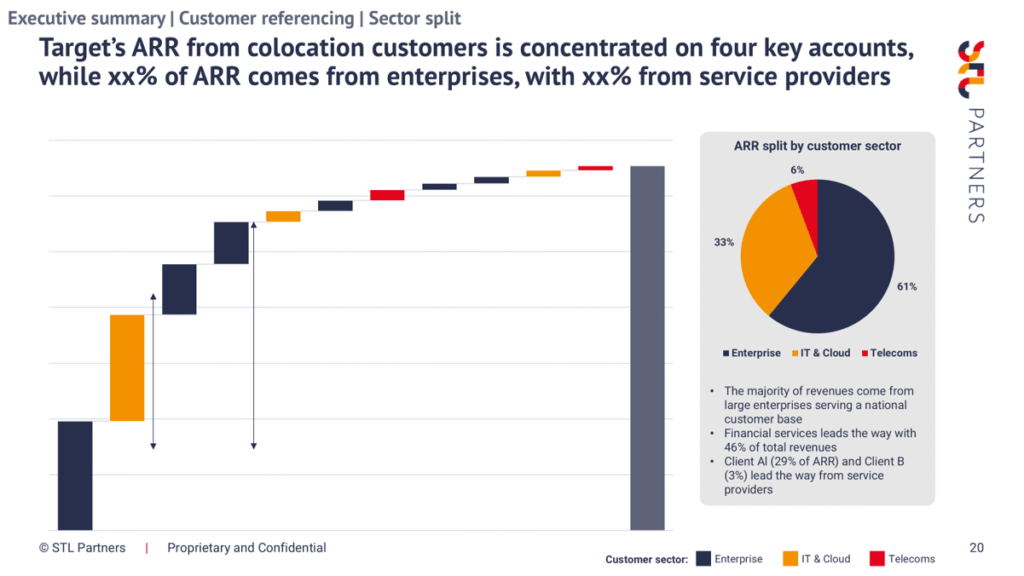
- To validate the expected value derived from the acquisition, we evaluated key downside risks including validating forecasted churn assumptions through customer interviews, as well as evaluating customer concentration, industry split and company sizes to evaluate opportunities to grow revenues through customer retention and upsell.
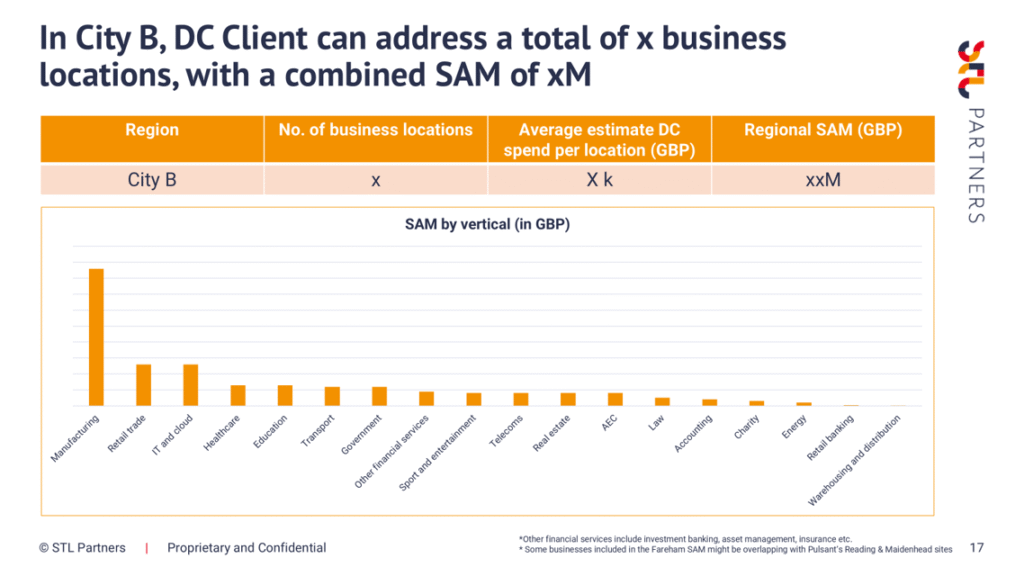
- We augmented this with geographic analysis of customer acquisition opportunities, and produced an integrated revenue forecast for the client to incorporate into their financial models.
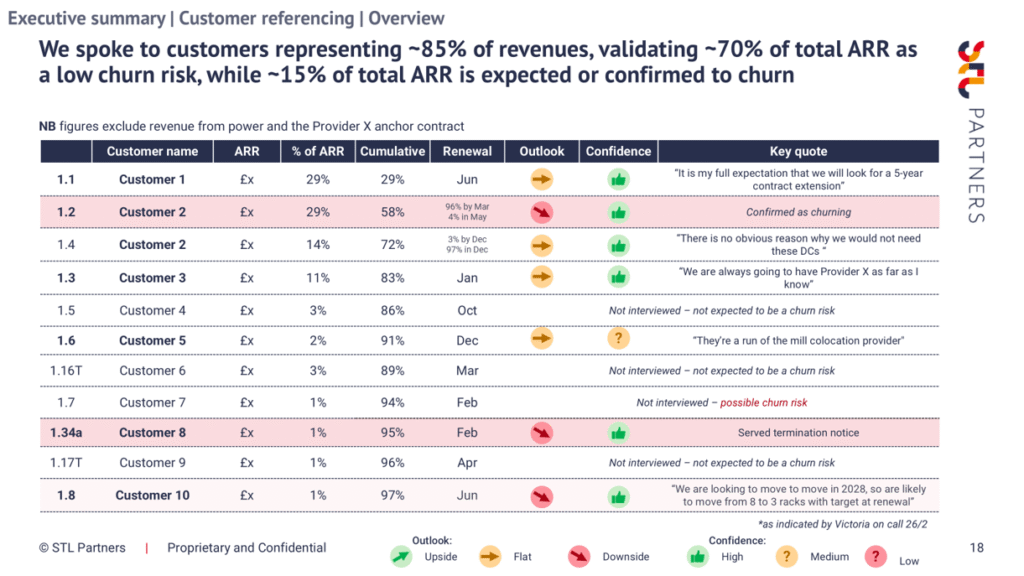
- Through interviews with c.50% of the target’s existing customers, STL delivered high-confidence insights on customer retention and acquisition, ensuring the client could proceed with the acquisition with a complete picture of the nuance behind the revenue forecasts provided by the target, as well as the broader market landscape. The acquisition was successfully completed.
Example deliverables
What was the approach?
STL split the project into two key workstreams: customer retention and acquisition
- To validate assumptions on customer retention, STL conducted interviews with customers representing over 85% of ARR, to assess the role of the facility in their broader digital infrastructure strategy, as well as their satisfaction with the existing infrastructure and service provided, and future contract intentions.
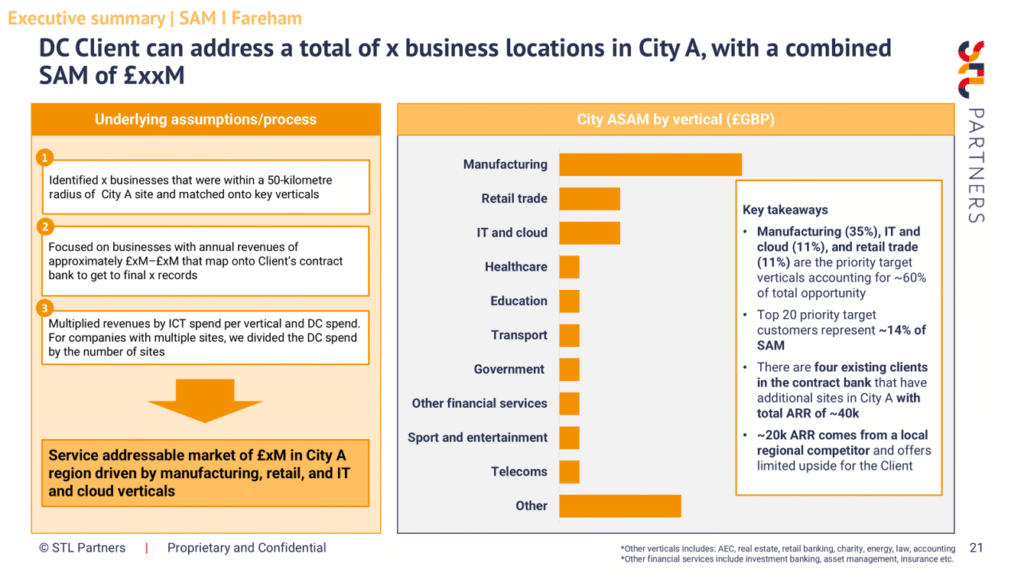
- To assess the potential for customer acquisition, STL identified regional targets through analysis of key company attributes with a geographic overlay, and estimated the Service Addressable Market (SAM) based on historic relationships and current trends linking colocation spend to publicly available financial data for these targets.
Key results from the project
- STL identified a significant churn risk related to 13% of the target’s total revenue, related to 46% of an MSP’s spend with the target, which was at risk due to their own customer churn.
- STL identified this through multiple interviews with the customer in question, resulting in open disclosure and a material price reduction for our client in the acquisition.
- In parallel, we identified several potential upside opportunities for the client, including:
- An MSP actively seeking to divest its own data centres – presenting a potential acquire and host opportunity.
- Another MSP aiming to consolidate disaster recovery (DR) suppliers and expressing interest in a strategic partnership with our client.
Example deliverables