
Next phase of AI-RAN: Solving operational challenges to unlock new opportunities
AI-RAN is rapidly evolving from a network optimisation technology into a platform for new revenue generation. From enabling distributed AI infrastructure and sovereign AI to supporting autonomous networks and AI-enabled enterprise services, it offers telecommunications service providers an opportunity to play a much broader role in the AI value chain. Yet before these opportunities can be realised, service providers must address a growing set of operational challenges around orchestration, governance, talent and commercialisation.
The AI-RAN conversation has evolved rapidly over the past two years. Today, AI-RAN is increasingly associated with AI factories, sovereign AI infrastructure, autonomous networks and new enterprise services delivered from distributed edge environments. The vision is compelling. Service providers see an opportunity to transform network infrastructure into a platform that supports both connectivity and AI workloads, creating new revenue streams from AI infrastructure and services. As governments and enterprises place greater emphasis on digital sovereignty, service providers are also uniquely positioned to offer trusted, nationally distributed infrastructure that provides greater control over where AI workloads run and how data is governed – an advantage that can differentiate them from hyperscale cloud providers. Meanwhile, enterprises are exploring how distributed AI infrastructure could enable new applications in robotics, manufacturing, logistics and real-time communications.
However, much of the industry’s focus remains on what AI-RAN could become rather than what service providers will need to do to make it successful. The reality is that AI-RAN is entering a new phase. The technical feasibility of AI-RAN has largely been established through demonstrations, pilots and ecosystem partnerships. The next challenge is moving from pilots to products. Service providers must determine which AI-RAN-enabled services they want to offer, validate customer demand and build the operational capabilities needed to deliver those services at scale. This means solving a growing set of Day 2 challenges around go-to-market strategy, commercialisation, orchestration, governance, automation and talent. The service providers that succeed will not necessarily be those that deploy AI-RAN first. They will be those that can balance rapid AI innovation and experimentation with the reliability, resilience and regulatory compliance expected of telecom networks.
The operational challenges service providers need to solve
There are several examples of technologies that proved technically viable but struggled to achieve commercial success because service providers lacked the operational capabilities required to deploy and scale them effectively. Technologies such as multi-access edge computing (MEC) and network slicing generated significant industry excitement but took longer than anticipated to achieve widespread commercial adoption as service providers worked through challenges around ecosystem development, go-to-market strategies and operational execution. AI-RAN risks following a similar path if service providers do not address the practical realities of running AI-enabled network infrastructure. The following challenges are likely to determine which service providers successfully transition from AI-RAN experimentation to large-scale deployment.
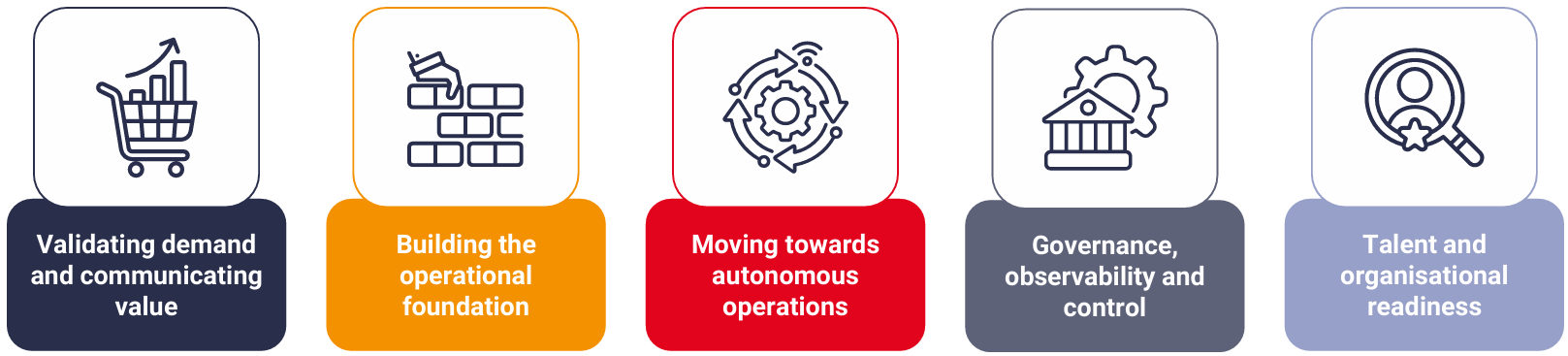
Figure 1: Service providers need to address some challenges before deploying AI-RAN at scale
Source: STL Partners
1. Validating demand and communicating value
Within the telecom industry, there is growing consensus around the potential of AI-RAN. Outside telecom, however, awareness remains limited. Many enterprises are still trying to understand the differences between traditional cloud services, edge computing, AI factories and AI-RAN-enabled infrastructure, as well as when each deployment model is most appropriate. At the same time, growing concerns around digital sovereignty are beginning to influence infrastructure decisions, particularly in sectors where organisations require greater control over where AI workloads run, where data is processed and how critical systems are governed. While vendors and service providers often focus on technical concepts such as GPU utilisation, infrastructure sharing and distributed compute architectures, enterprise customers are more interested in solving business problems while meeting these broader operational and regulatory requirements.
This creates two related challenges. First, service providers cannot assume that building AI-RAN infrastructure will automatically create demand. They must identify where AI-RAN delivers meaningful advantages over alternative solutions and communicate those benefits in terms that resonate with enterprise decision-makers. For some customers, this may be lower latency or distributed intelligence; for others, digital sovereignty may become the deciding factor, with AI-RAN enabling greater control over where AI workloads run, where data is processed and how critical AI infrastructure is governed. Second, service providers need to define what they are actually bringing to market. Are they selling AI infrastructure, AI-enabled connectivity, sovereign AI platforms or managed AI services? The answer will determine not only how AI-RAN is positioned, but also which ecosystem partners are required and how commercial models are structured.
The most promising opportunities are likely to emerge in industries that require low-latency processing, local data handling or distributed intelligence. Sectors such as manufacturing, automotive, transport and logistics, retail and healthcare are increasingly exploring AI-enabled automation, robotic AI and real-time decision-making, making them strong candidates for early adoption of distributed AI infrastructure. Rather than pursuing broad infrastructure deployments, service providers should focus on a small number of high-value use cases, validate demand and refine their go-to-market approach before scaling further.
2. Building the operational foundation
The second challenge is operational complexity. Running AI-RAN involves much more than managing radio network resources. Service providers must simultaneously manage AI workloads, cloud-native infrastructure, GPUs, edge compute resources, and network functions, often across highly distributed environments. This raises important questions. How should resources be allocated between network and AI workloads? How can service providers ensure consistent performance across distributed environments? What orchestration frameworks are needed to manage increasingly dynamic infrastructure? Many of these questions remain unanswered.
As AI-RAN evolves, orchestration is likely to become one of the most critical capabilities service providers need to develop. The industry is moving towards a future in which infrastructure must continuously adapt to changing network conditions, workload demands and business priorities. At the same time, service providers will need to ensure secure multi-tenancy, regulatory compliance and supply chain security across increasingly distributed AI environments, placing greater emphasis on observability and governance. Achieving this will require a level of operational sophistication that many service providers are still developing.
3. Moving towards autonomous operations
The complexity of future network environments means service providers cannot rely indefinitely on manual processes. Distributed AI workloads, cloud-native architectures, and dynamic resource allocation create operational challenges that quickly exceed human capacity. This is why the industry is increasingly exploring agentic AI and autonomous operational models.
Earlier this year, Ericsson demonstrated a multivendor agentic AI solution for Cloud RAN environments designed to automate fault management across different network domains. While still at an early stage, initiatives such as this illustrate how service providers may eventually manage increasingly complex AI-RAN environments. The challenge is not simply introducing automation. It is determining how autonomous systems can be deployed while maintaining operational trust, accountability, and control.
4. Governance, observability, and control
As networks become more autonomous, governance becomes increasingly important. Service providers will need visibility across infrastructure resources, AI workloads, network behaviour, and automated decision-making processes. They must understand not only what actions autonomous systems are taking, but why they are taking them.
This challenge is already becoming apparent in the industry’s work on intent-based networking. The TM Forum’s Conflict Management in Intent-Based Networks Catalyst highlights the growing need for mechanisms that can resolve competing objectives across autonomous systems. One AI agent may seek to optimise network performance while another prioritises energy efficiency or cost reduction. Without clear governance frameworks, these objectives can come into conflict.
Observability, explainability, and policy management will therefore become foundational requirements for AI-RAN deployments rather than optional enhancements.
5. Talent and organisational readiness
AI-RAN requires expertise spanning telecoms, cloud infrastructure, and artificial intelligence. Service providers need people who understand GPU infrastructure, AI/ML engineering, orchestration frameworks, cloud-native operations, and network engineering. These capabilities remain in short supply.
The challenge is not simply hiring talent but determining how organisations should evolve. Service providers must decide which capabilities to build internally, where to rely on ecosystem partners and how to adapt existing operating models to support increasingly software-driven infrastructure. For many service providers, organisational transformation may prove more difficult than technical deployment.
The opportunities that solving these challenges can unlock
The good news is that these challenges are worth solving. If service providers can successfully operationalise AI-RAN, they stand to benefit from opportunities that extend far beyond traditional network optimisation.
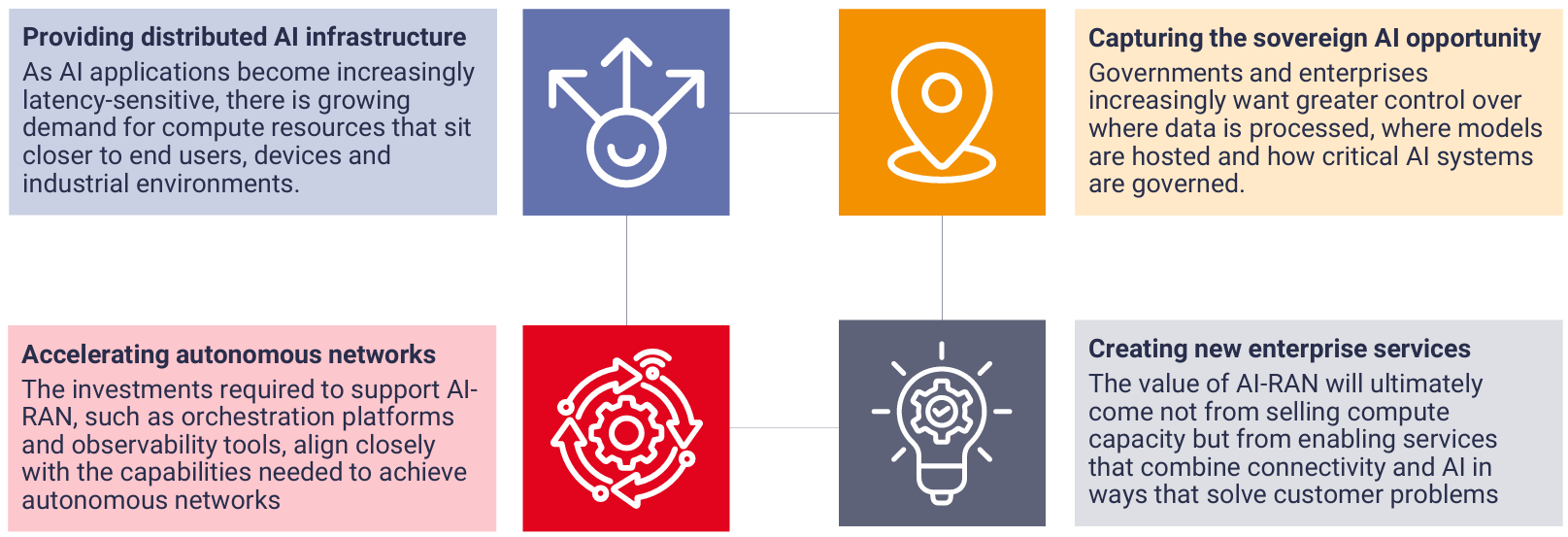
Figure 2: AI-RAN can unlock several opportunities for telcos
Source: STL Partners
1. Becoming providers of distributed AI infrastructure
As AI applications become increasingly latency-sensitive, there is growing demand for compute resources that sit closer to end users, devices, and industrial environments. This creates a natural role for service providers, whose infrastructure already extends from centralised facilities to regional sites and edge locations. The TM Forum’s “Robotic Dog AI at the Edge” Catalyst offers an early example of this opportunity. The project demonstrated how AI-powered robotic systems can offload processing tasks to nearby edge infrastructure, reducing battery consumption while maintaining real-time performance. Although the use case focused on robotic assistance, the broader implications extend to industrial automation, logistics, manufacturing, and smart infrastructure.
However, supporting these workloads requires more than deploying GPUs at the network edge. Service providers need production-ready AI infrastructure that can reliably support AI inference at scale while integrating with cloud-native environments. Industry initiatives such as the collaboration between Red Hat and NVIDIA on AI factories are helping establish the software platforms, orchestration capabilities and operational frameworks needed to move AI workloads from experimentation into production.
AI-RAN provides service providers with an opportunity to become providers of the distributed compute infrastructure that supports these applications.
2. Capturing the sovereign AI opportunity
Sovereignty is rapidly emerging as one of the strongest drivers of investment in AI infrastructure. Governments and enterprises increasingly want greater control over where data is processed, where models are hosted, and how critical AI systems are governed. At the same time, concerns around regulatory compliance, security, and dependence on foreign cloud providers are pushing organisations to explore alternative infrastructure models.
This creates a significant opportunity for telecom service providers. Unlike many other players in the AI ecosystem, service providers already own and operate trusted, nationally distributed infrastructure, while also having experience managing critical services under stringent regulatory requirements. These assets position them well to support sovereign AI initiatives that require localised compute, secure data handling, and strong governance frameworks.
As sovereign AI strategies mature, the focus is also shifting beyond data residency towards architectural control. Organisations increasingly want control not only over where data resides, but also over how AI models and autonomous agents are deployed, governed and secured throughout their lifecycle. Recent enhancements to the Red Hat AI Factory with NVIDIA reflect this evolution by introducing capabilities such as policy enforcement, confidential computing and lifecycle management for autonomous AI. Together with AI-RAN, these capabilities enable service providers to offer AI infrastructure that is not only distributed, but also trusted and governable.
3. Accelerating autonomous networks
AI-RAN could also become a catalyst for broader network transformation. The investments required to support AI-RAN – including orchestration platforms, observability tools, and agentic AI systems – align closely with the capabilities needed to achieve autonomous networks. This convergence is already becoming visible through industry collaborations. Arm and Red Hat have recently explored how agentic AI infrastructure can support increasingly autonomous operational environments capable of reasoning, planning and acting across complex systems.
As service providers build the capabilities required to support AI-RAN, they may simultaneously accelerate progress towards autonomous networks.
4. Creating new enterprise services
Beyond infrastructure monetisation, AI-RAN could enable entirely new service categories. At MWC 2026, Mavenir demonstrated real-time AI-powered voice translation running on edge infrastructure. More recently, Mavenir and Red Hat announced a collaboration focused on carrier-grade conversational AI and agentic AI service assurance for telecom service providers.
These examples highlight an important shift. The value of AI-RAN will ultimately come not from selling compute capacity but from enabling services that combine connectivity and AI in ways that solve customer problems. Applications such as real-time translation, AI-enabled customer service, industrial automation, and intelligent edge services could become important new revenue streams for service providers.
The next phase of AI-RAN
AI-RAN is entering a critical period. The opportunities are increasingly clear. Distributed AI infrastructure, sovereign AI, autonomous networks, and new enterprise services all represent significant growth opportunities for service providers. Yet none of these opportunities will be realised automatically. The service providers that are most successful are unlikely to be those pursuing the largest infrastructure investments today. Instead, they will be those that can identify the right use cases, build the right ecosystem partnerships, and develop the operational capabilities needed to support increasingly complex AI-enabled environments. As AI-RAN converges with sovereign AI initiatives, AI factories and autonomous networks, it has the potential to become a foundational part of future digital infrastructure.

Are you looking for advisory services in AI-RAN
Download the AI-RAN market overview
Download the AI-RAN market overview
AI-RAN is shifting from hype to practical strategy. This overview pack explains what AI-RAN is, why it matters now, and how operators can capture value.