Case study overview
STL Partners was engaged by a US-based provider of cooling systems for data centres, looking to capture a share of the growing edge opportunity by tailoring its solutions for emerging infrastructure needs.
To support this, the client needed a clearer view of where demand is emerging across the edge data centre landscape, which cooling solutions are best suited to different environments, and how to shape a go-to-market strategy that aligns with the needs of prospective customers. STL undertook voice of the market research, produced a revenue forecast (TAM, SAM, SOM) and produced strategic recommendations to guide prioritisation and positioning.
Example deliverables
What was the approach?
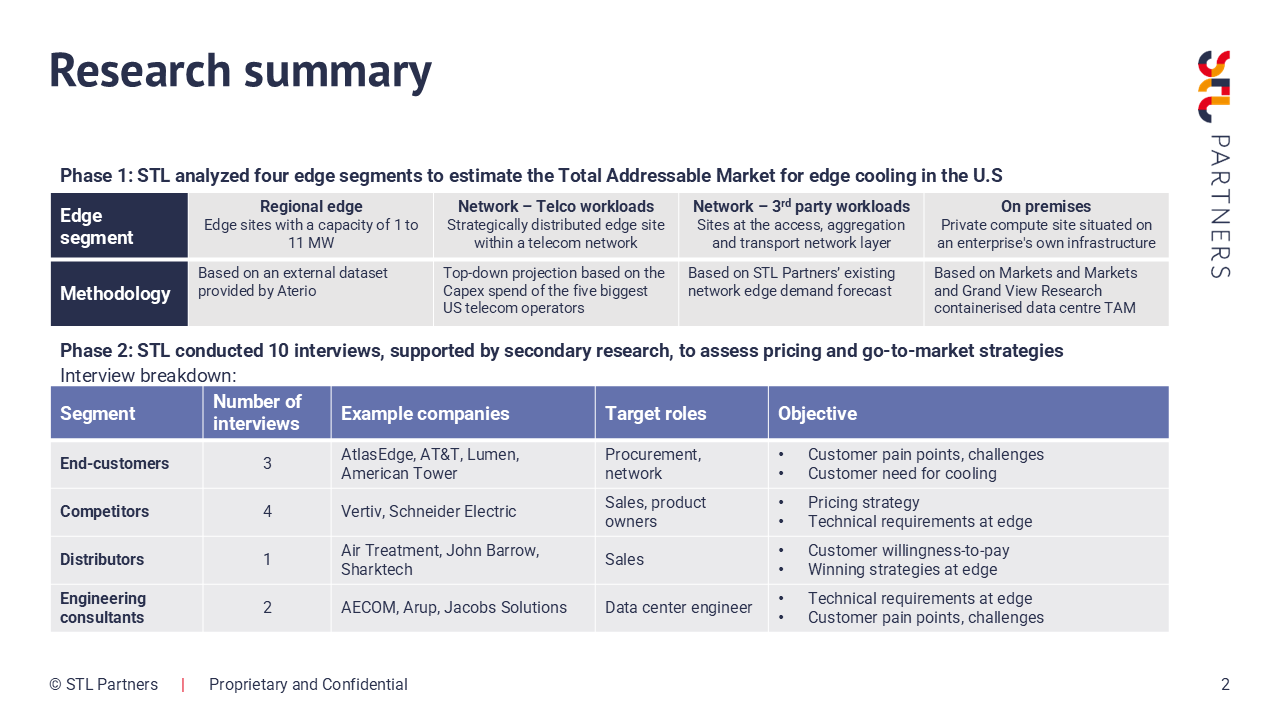
STL sized the total addressable market for edge cooling in the US by analysing four edge segments:
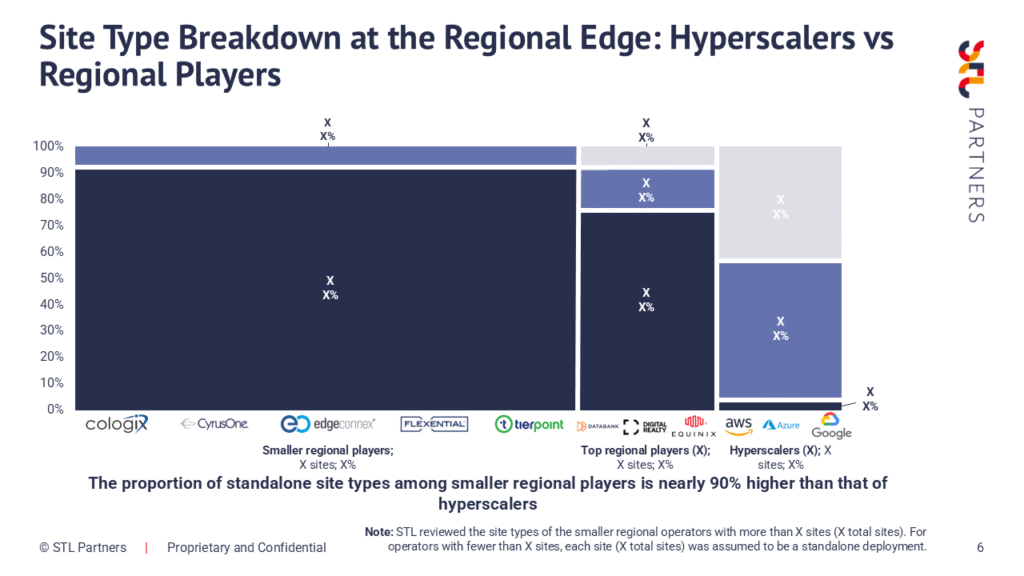
- Regional edge (1–11MW sites)
- Network – telco workloads (operator-owned edge nodes)
- Network – third-party workloads (access, aggregation, and transport layers)
- On-premises (enterprise-owned compute at the edge)
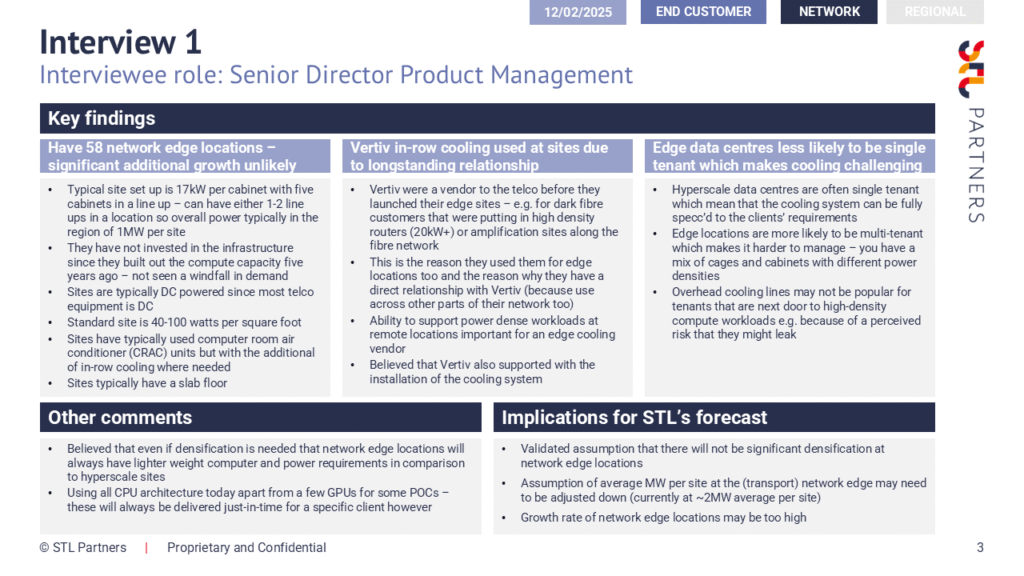
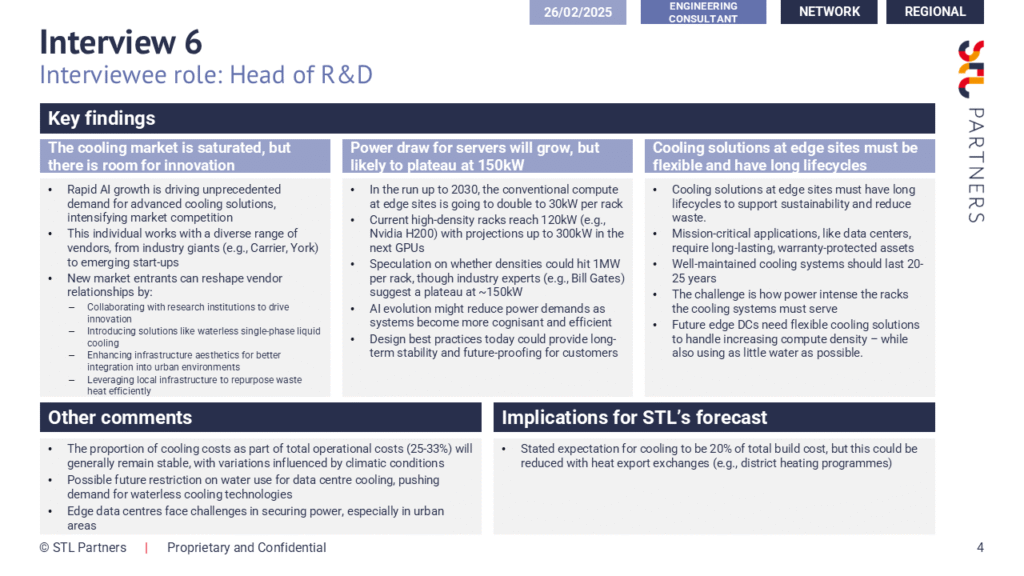
e team also conducted interviews with 10 stakeholders across the edge cooling ecosystem, spanning end-customers, competitors, distributors, and engineering consultants, to gather insights on demand drivers, customer pain points, technical requirements, and pricing strategies.
Key results from the project
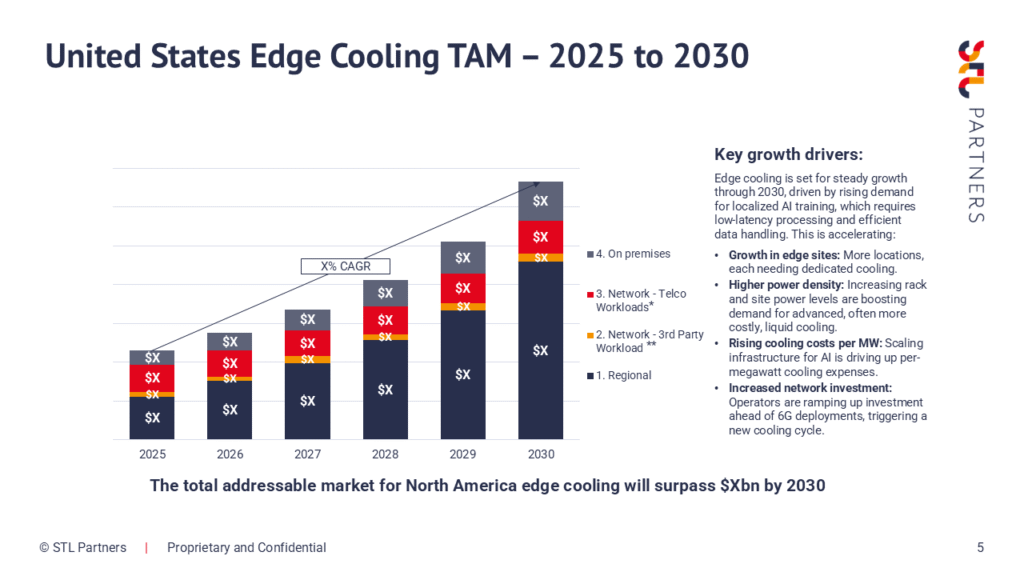
Edge cooling market model:
- STL estimated the total and serviceable addressable market for cooling equipment across the four edge data centre segments, projecting revenue potential to 2030 and identifying the share addressable by the client.
Product-level analysis:
- STL tested key cooling system types and feature sets in the voice of the market research, understanding which was most prevalent in the edge sector today (monobloc cabinet cooler, in-row DX, CRAH, CRAC and chiller and different types of liquid cooling).
Go-to-market strategy:
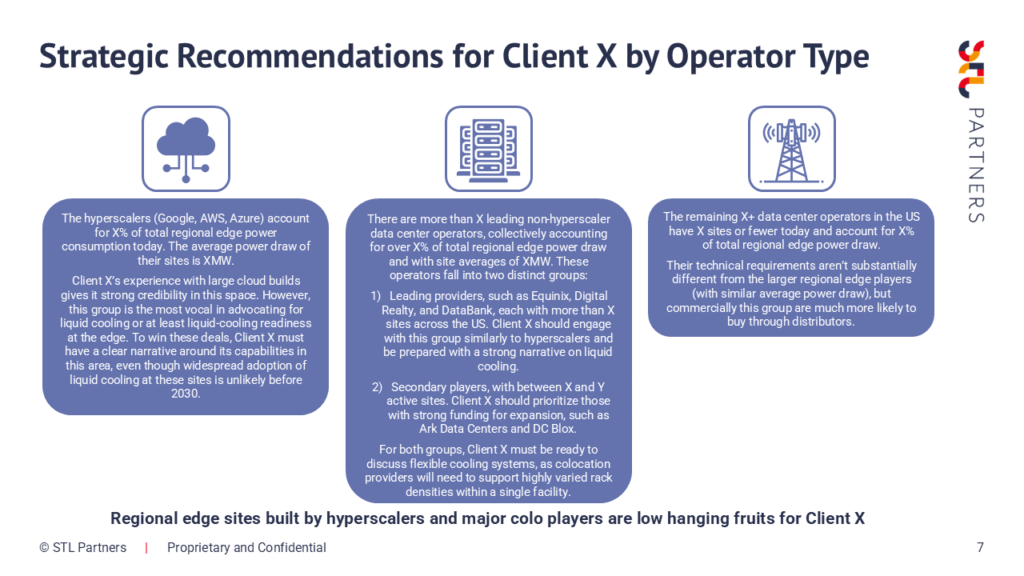
- TL identified the market segments with the greatest commercial potential for the client and outlined how to approach target customers. Recommendations included segment prioritisation, messaging, and how to differentiate based on the client’s existing and upcoming capabilities.
Example deliverables